Chris Franklin, Chairman of Ranheat Engineering Ltd, a leading UK manufacturer of wood combustion equipment, continues his exclusive series for Furniture & Joinery Production. This month, he looks at boiler efficiency in the woodworking industry.
Wood waste generated during the manufacturing process is regulated by either the Local Authority or the Environment Agency, depending on the size of the operation.
Even when the material is virgin timber, it is still classed as waste once it becomes a by-product of manufacturing, meaning a permit is required to burn it.
If you process (purchase) more than 1,000m³ of wood or wood-based products, you will require a Part B permit under guidance note PGN 6/02. A wood combustion process can be added to this permit.
Staying within the 90kg threshold
The regulations are then based on the maximum fuel throughput of the boiler or heater, which is set at 90kg per hour. Exceed this limit and the appliance falls under a different set of regulations with stricter emissions requirements, particularly for particulate matter in the flue gases. Appliances above the 90kg threshold must also be independently tested each year, so there are clear advantages to remaining below the limit.
Extracting more energy from the fuel
If your factory requires a higher heat output, this can still be achieved by using a high-efficiency appliance. Put simply, a more efficient boiler extracts more energy from the fuel while operating at a lower flue gas temperature, meaning more of the available energy is used rather than lost up the chimney.
The same principle is widely used in gas-fired condensing boilers. With a wood-fired boiler or heater, the aim is to keep the flue gas temperature just above the dew point, where moisture in the flue gases begins to condense into water.
Most wood-burning appliances, even when burning man-made boards, use fuel with a moisture content of around 8-12%. At a consumption rate of 89kg per hour and 10% moisture content, this equates to almost nine litres of water passing up the chimney every hour.
Why fit a thermal economiser
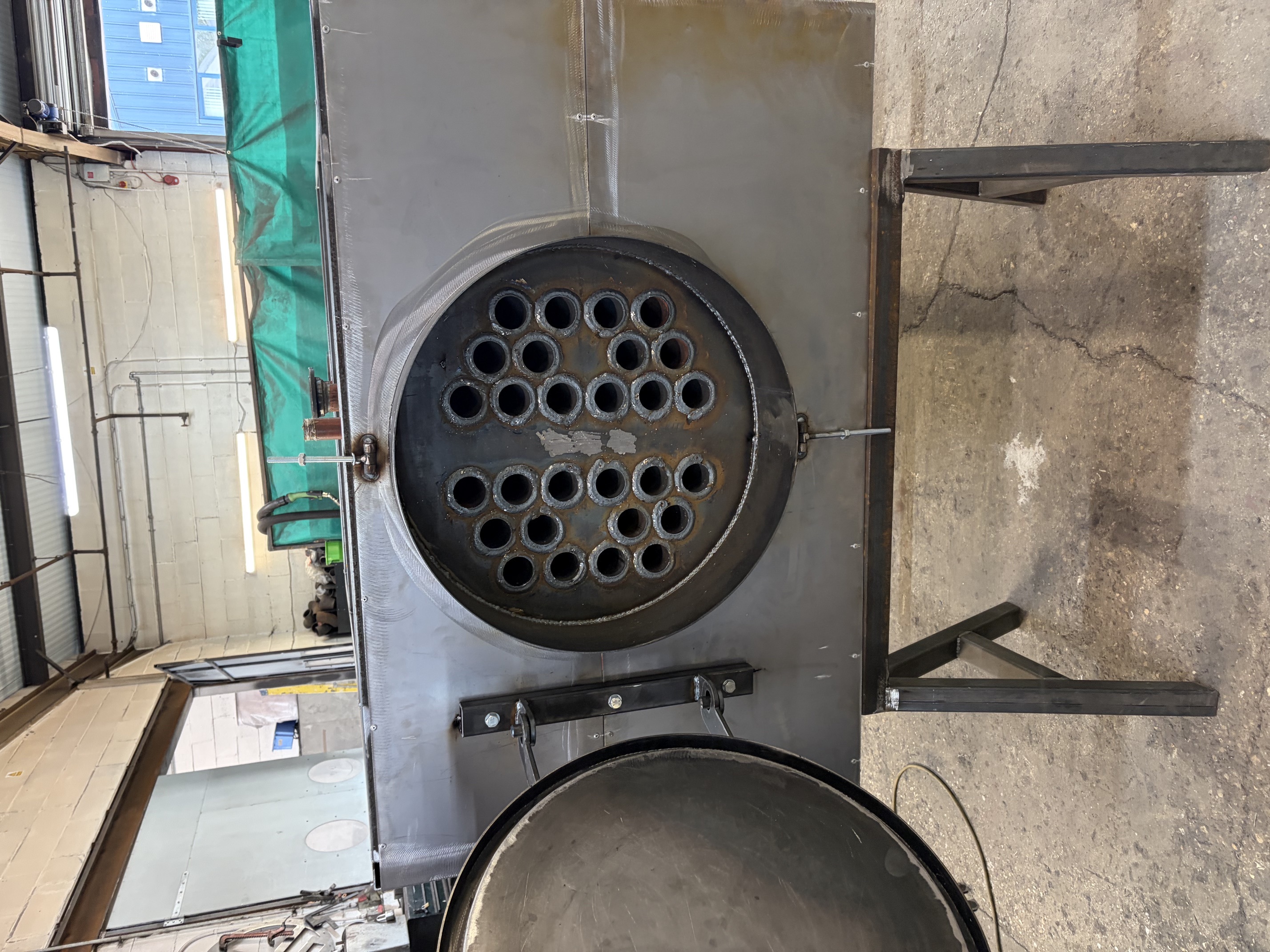
So how is greater efficiency achieved? By fitting a thermal economiser.
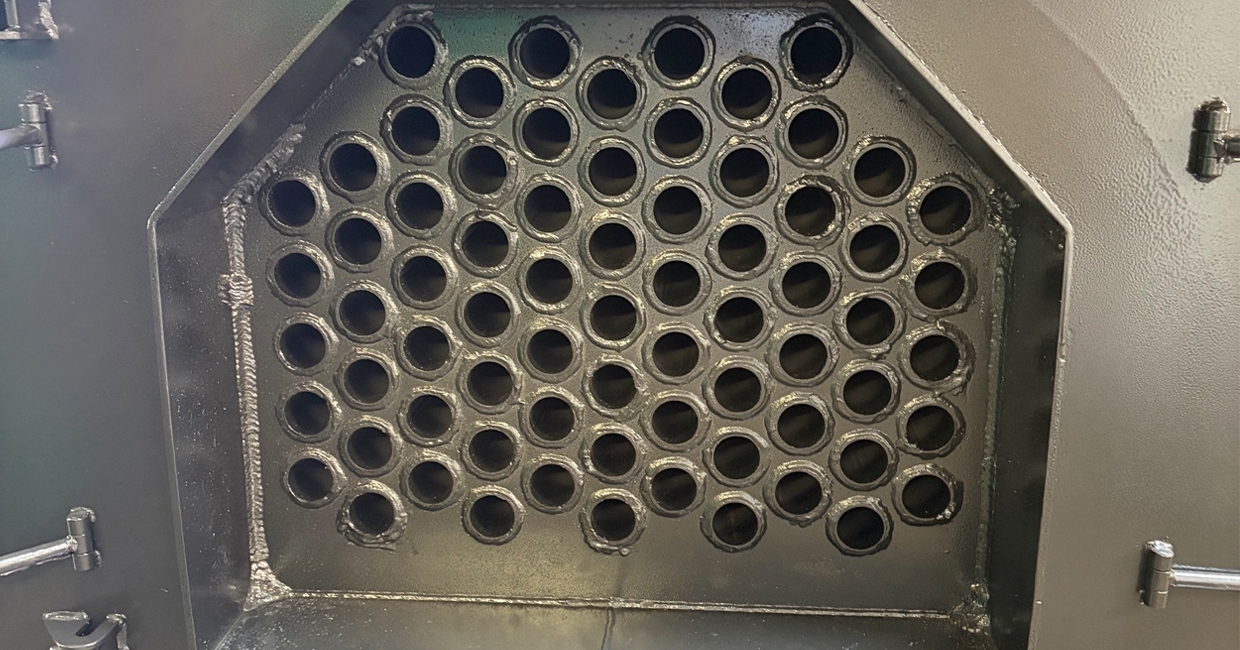
Ranheat’s boiler in this category has a nominal output of 300kW and is designed as a three-pass boiler. The first pass is above the fire in the radiant section, before the flue gases pass through a multi-tube heat exchanger for the second and third passes.
Adding a thermal economiser introduces a fourth and fifth pass through two additional multi-tube heat exchangers, effectively creating a five-pass boiler.
This extracts the maximum amount of energy from the fuel, reducing wasted heat and increasing useful output without exceeding the 90kg per hour fuel consumption limit.
A thermal economiser can be supplied as part of a new installation or retrofitted to an existing boiler to increase its output.
Running at lower flue temperatures also brings additional benefits. Components downstream of the boiler, including induced draught fans and flue gas cleaning equipment, operate at lower temperatures, helping to extend their service life.
For further information on industrial wood-burning equipment from 75kW upwards, contact Ranheat on 01604 750005, email [email protected], or visit www.ranheat.com.
Ranheat also supplies spare parts and services and repairs other makes of wood-burning boilers and heaters.