
Nederman discusses why the 2026 HSE update matters for woodworking businesses — and why having the right extraction system is only part of the compliance picture.
The number hasn’t changed. The hardwood dust Workplace Exposure Limit is still 3mg/m³, exactly as it’s been since 2020. If your last COSHH assessment ticked that box and you’ve filed it away, it would be easy to assume you’re covered for another few years.
That assumption is the blind spot.
What’s actually changed in 2026
HSE’s 2026 update to EH40, the guidance document that sets Workplace Exposure Limits, hasn’t touched the hardwood dust number itself. What it has done is introduce new guidance on how exposure should be measured. In practice, that means a business can be running the same setup, generating the same dust levels, and still find itself out of step with what HSE now expects to see when it looks at your monitoring data.
This isn’t an isolated tweak. HSE has been explicit that carcinogen and dust compliance will be a focal point of workplace inspections through 2026 and into 2027, and wood dust monitoring specifically has been flagged as a priority for enforcement visits across both years. Wood dust is classified as a Group 1 carcinogen, in the same category as asbestos and crystalline silica, and inspectors are treating it accordingly.
The scale of the problem
HSE ran a dedicated inspection programme specifically targeting woodworking businesses in 2022/23; over 1,000 site visits, checking compliance with respiratory sensitiser controls for wood dust from hardwoods, softwoods, and composites like MDF. The result: 78% were found non-compliant, leading to 402 enforcement actions. That’s not a handful of outliers. That’s the majority of the sites inspected, and it’s specifically about wood dust, not the wider construction-dust remit HSE also covers under its Dust Kills messaging.
The common failure isn’t dramatic. It’s rarely a business ignoring the problem outright. It’s more often a categorisation error. Sawdust gets treated as a housekeeping issue rather than a controlled substance, and the response gets sized to match. A quick sweep-up instead of a properly specified, properly maintained extraction system with monitoring to prove it’s doing its job.
What we heard at PWE 2026
This tracked closely with what we heard from operators at PWE2026 in June. Compliance came up repeatedly in conversations at the stand. Not as a top-line concern people led with, but as something that surfaced once we started talking specifics. Facilities managers who knew their WEL numbers but had questions as to whether their monitoring paperwork would hold up to an inspection. Production managers who had inherited a system from a previous fit-out and had never had it independently assessed. It’s rarely negligence. It’s more often a gap between “we have extraction” and “we have compliant extraction we can evidence.”
What to check now
If you haven’t had wood dust monitoring conducted in the last three years, that’s the first place to start. Regulation 7 of COSHH requires it, and it’s specifically what HSE is prioritising for enforcement. Alongside that:
Confirm your LEV thorough examination and test (the statutory LEV check) is current and the paperwork is accessible
Review your COSHH risk assessments against the updated EH40 measurement guidance, not just the WEL numbers themselves
Check that whoever holds responsibility for this locally, knows where the monitoring records sit
None of this requires ripping out a working system. It requires being able to prove, on the day an inspector visits, that the system you have is being properly managed and doing what is required. That’s the gap between being compliant and merely functional, and it’s the one worth closing before 2026’s enforcement focus catches up with you rather than after.
Where Nederman fits
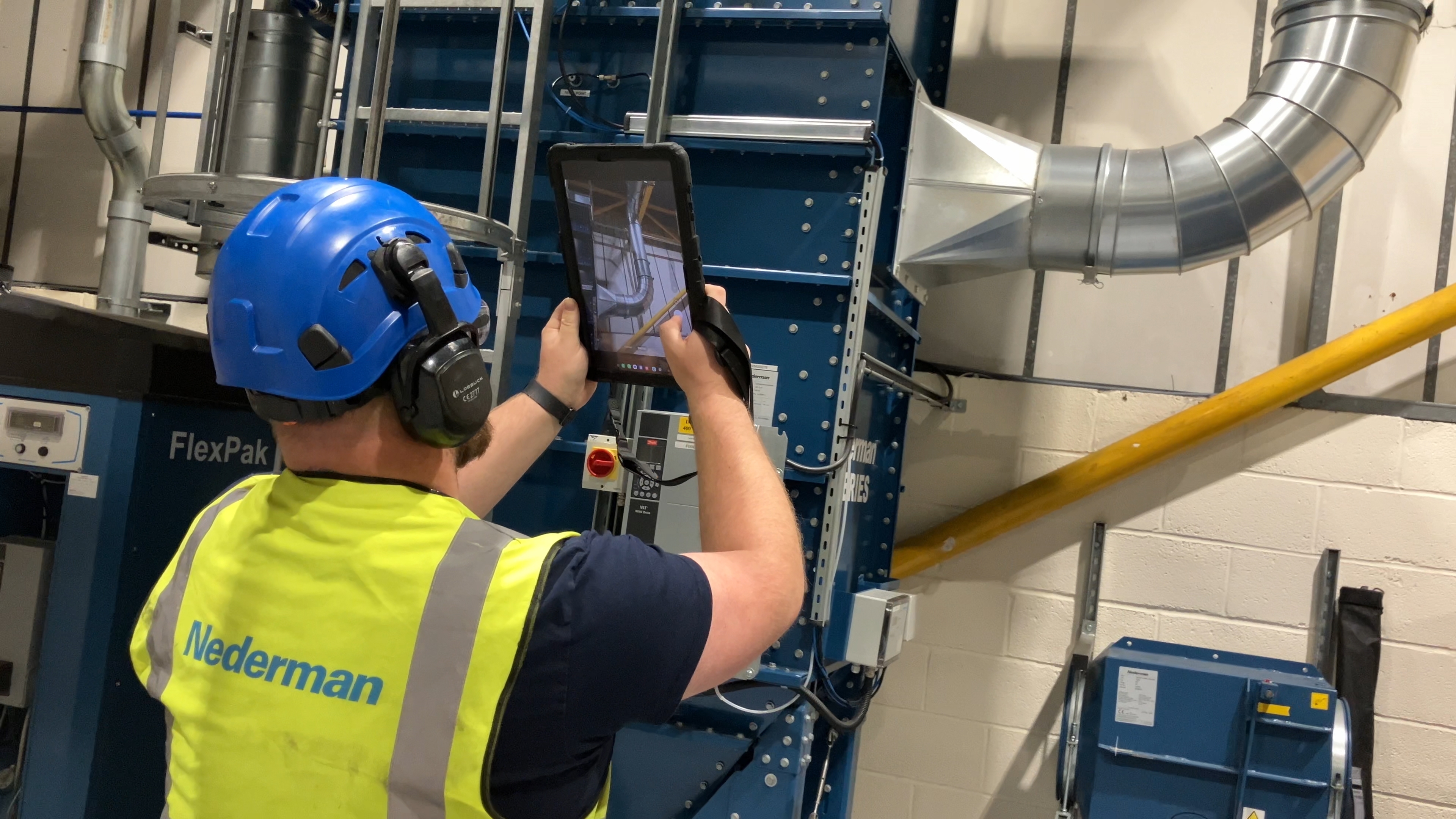
If you’re not confident that your current system’s stand up to that scrutiny, that’s exactly the gap a compliance-focused system assessment is designed to close. Nederman can review your existing extraction setup against current COSHH and EH40 requirements, identify where monitoring or documentation is falling short, and recommend what’s needed to bring it up to standard, all recorded and documented through the Nederman Connect service app.
Whether that’s a straightforward LEV service, updated monitoring, or a more substantial upgrade if the system has simply been outgrown. You don’t need to replace what’s working. You need to know, with evidence, that it is.