
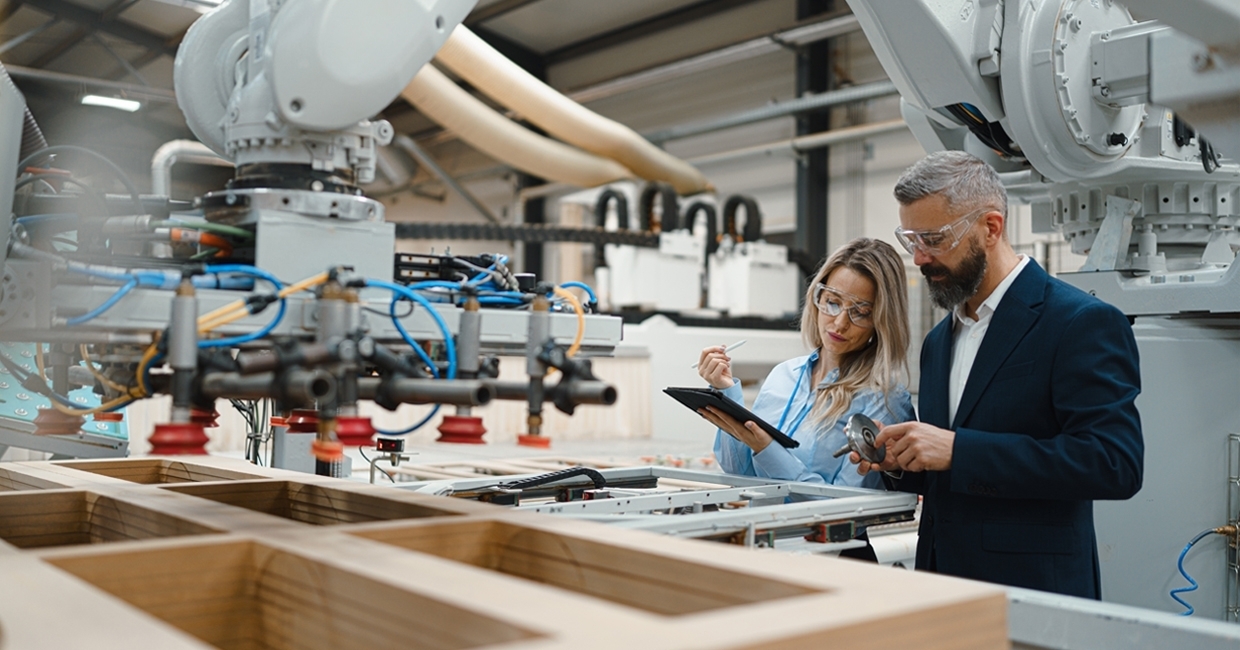
There is no doubt that AI is changing the face of manufacturing, yet what is possible and what is optimal when it comes to utilising this remarkable technology are arguably two very different matters.
Within furniture manufacturing, specifically, AI is an incredibly useful tool when applied incrementally to clearly defined manufacturing challenges, before scaling up. Used in this way, it supports engineering expertise, process knowledge and craftsmanship, rather than replacing them.
Precision, repeatability and efficiency are, of course, key tenets of CNC-driven furniture manufacturing. AI has great potential as a logical next step here, creating exciting opportunities for manufacturers actively planning their next CNC and automation investments. The question is, in which areas can AI optimise operations?
Predictive maintenance
Unplanned downtime is undoubtedly one of the most disruptive and costly scenarios for manufacturers. With the use of AI-driven predictive maintenance systems, anomalies can be detected early, whether that might be spindle vibration patterns or tooling degradation.
When executed well, this ensures that the likelihood of CNC bottlenecks is significantly reduced, while reducing maintenance costs, increasing equipment lifespans and overall efficiency. The importance of this proactive approach cannot be understated given the backdrop of time pressures and shrinking quality margins.
AI-based quality inspection and safety systems on the shopfloor
Manual inspections within a manufacturing environment can be time-consuming, and are naturally subject to human error. Inconsistencies and the late detection of defects can be particularly damaging within CNC machining, where quality assurance is paramount.
AI-assisted inspection solutions can provide incredibly detailed and rapid analysis of the smallest imperfections via a system of cameras, lasers and sensors, acting as a second set of eyes and helping to prevent defects travelling downstream.
Additionally, AI-guided risk assessment has the potential to transform workplace safety. It can be utilised to monitor high-risk zones, perhaps around automated cells and handling areas, for unsafe conditions – from a preventative standpoint, rather than one of surveillance.
Material waste reduction
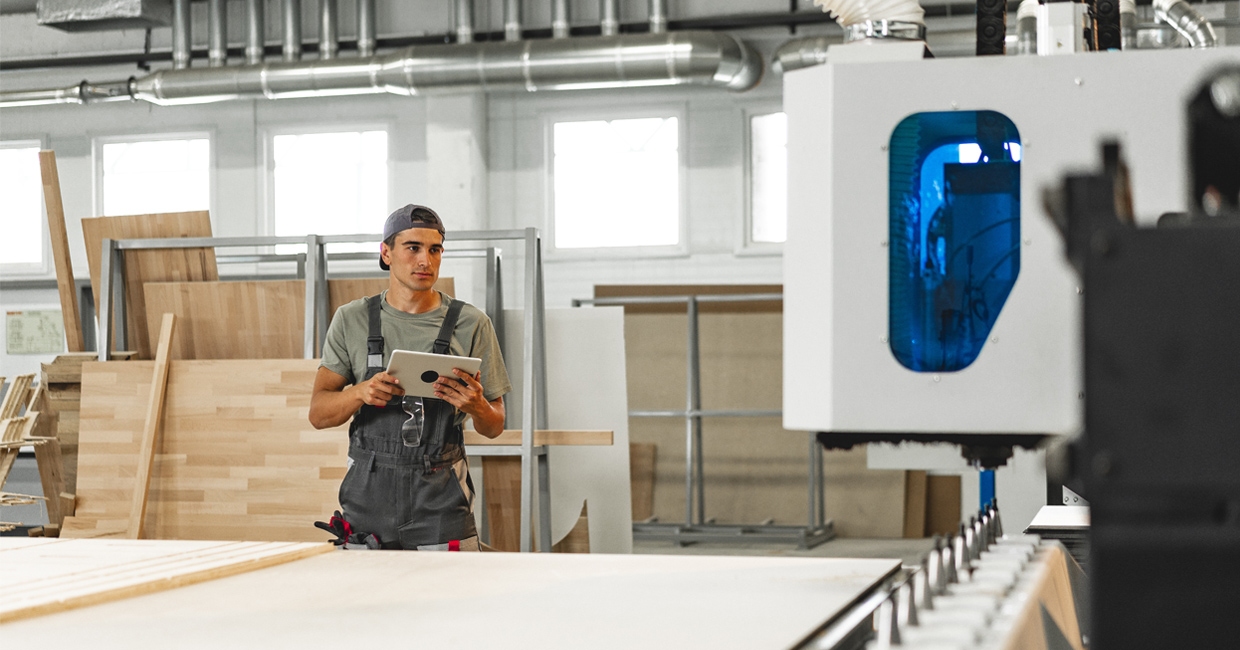
Material waste reduction is one of the most impactful areas in which AI can drive improvement. Not only do inefficiencies in the manufacturing process elevate production costs, but they can also negatively impact a business’s environmental goals.
AI integration can optimise tool paths and nesting, the adjustment of spindle speeds or material utilisation, with impressive precision and agility, delivering a profound operational impact.
AI as a support tool for skills development
There is no doubt that AI provides a valuable solution at a time when there is a glaring skills shortage. By automating repetitive or dangerous work, staff can be better utilised in higher-value technical or strategic roles.
AI-driven knowledge systems can provide operators with contextual guidance – machine setup instructions, troubleshooting steps, or parameter recommendations – based on real-time conditions.
Some might feel that this strategy will compound the existing issues, however it also provides an opportunity to upskill teams.
Production planning, scheduling and administrative support
AI-enabled planning can deliver meaningful gains by recommending schedules based on real-time data, factoring in machine availability, material readiness, disruptions, promised delivery dates and more. If implemented effectively, this will lead to a more efficient use of resources and ultimately a reduced administrative load.
Data quality, system integration and realistic ROI expectations
The importance of data quality cannot be overstated in AI projects. If data is incomplete or incorrect, it may amplify confusion, rather than insight. As such, a robust approach might include starting with a minimal set of trusted data, before expanding.
If it is built around measurable outcomes – such as reduced unplanned downtime, improved yield etc., – even modest steps can unlock faster decision-making and quality performance.
These are just some of the ways in which AI is already being utilised within the CNC machining sector to optimise the incredible technology already at our fingertips.
As this technology, and best practices, continually evolve, the most prudent AI investments in CNC machining are unlikely to be the boldest, or flashiest. Instead, they may take the form of a solidly built foundation, starting small by solving a real constraint, before scaling with confidence. Most importantly, the most successful will be those who use AI not to replace expertise, but to amplify it.