
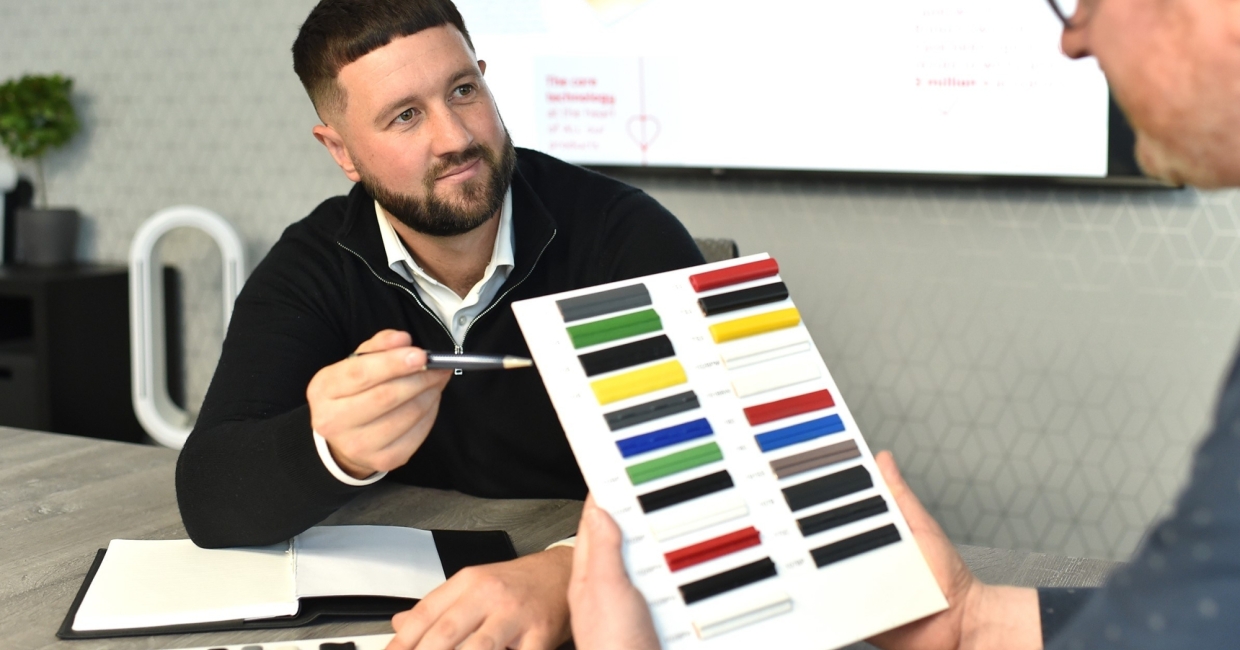
Tapeswitch Business Development Manager, Blake Shields, outlines why choosing safety system components should never be an off-the-shelf decision.
CNC safety is about balance – not between safety and productivity, because operator safety must always come first – but about creating systems that work effectively in real manufacturing environments.
Safeguarding must allow operators to work efficiently without encouraging safety bypassing. Pressure-sensitive mats and bumpers are both established technologies, but the focus is increasingly on which best suits a specific machine, workflow and operator behaviour.
On larger routers and machining centres, especially where loading, unloading, setup and intervention are part of normal operation, there is growing interest – from both OEMs and retrofit – in bumper-based arrangements and hybrid systems that preserve access while maintaining safe stopping performance.
UK HSE guidance identifies both pressure-sensitive bumpers and mats as suitable safeguarding options, depending on machine hazards and application.
Safety mats remain a robust and wellunderstood solution, particularly where it is appropriate to define a floor-based danger zone and stop the machine before a person can approach the hazard. ISO 13856-1, which covers pressure-sensitive mats and floors, sets out requirements for detecting people stepping onto the sensing area. However, the growing popularity of bumper-based systems reflects a wider industry understanding: safeguarding must work with the way people actually use machines.
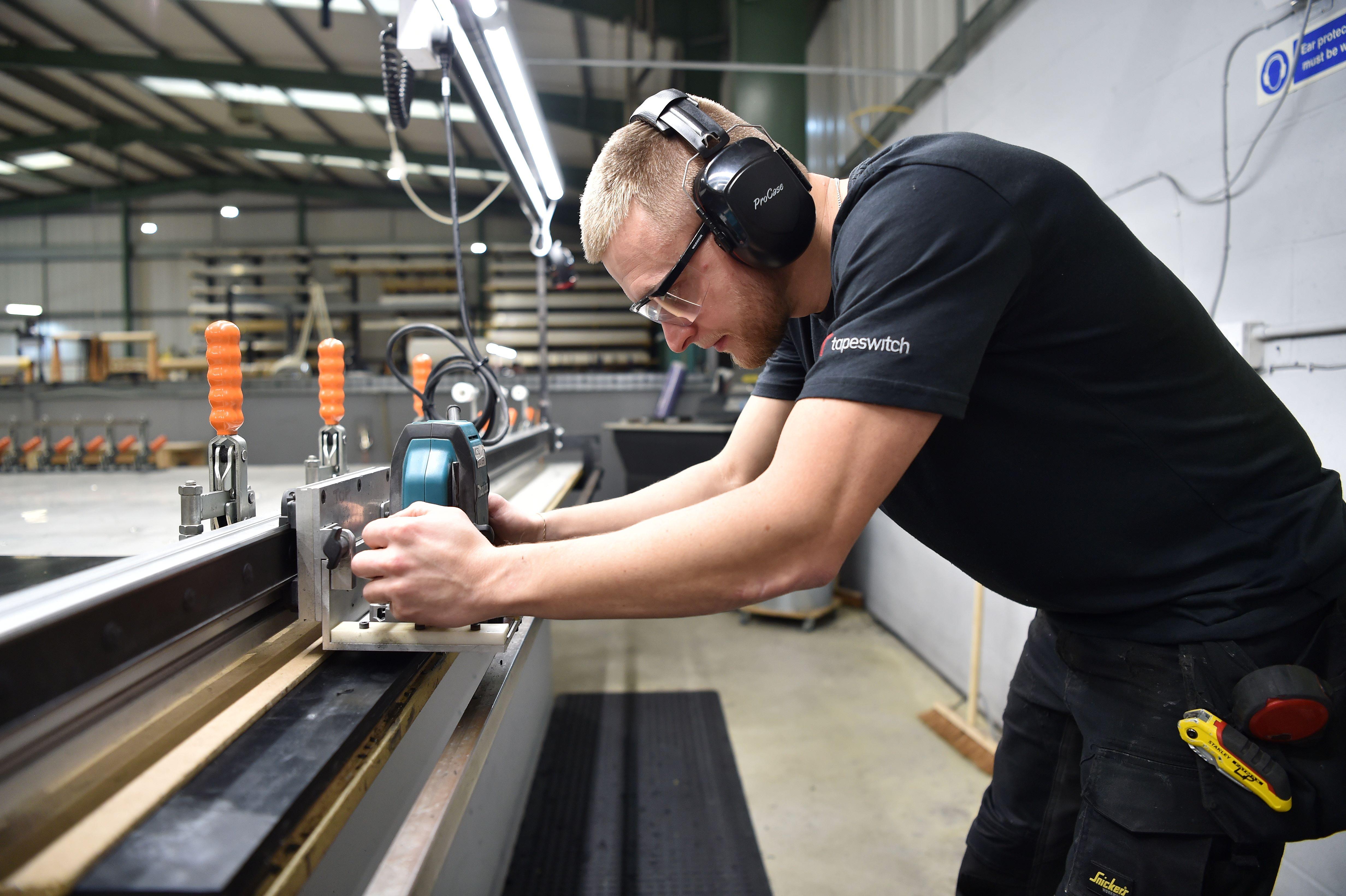
Why access has become a safety issue
Poor usability can itself become a safety risk. Research into machine safety has examined why guards and protective devices are bypassed. A literature review by Aida Haghighi and colleagues identified multiple incentives for bypassing safeguards, including productivity pressures, ergonomics, machine design, and corporate climate. The research notes that safeguards are often bypassed because they slow production, or create friction in normal work.
This closely matches guidance from Germany’s Institute for Occupational Safety and Health, which states that safeguards are most commonly bypassed when safety concepts are not adapted for easy operation. When maintenance, setup, troubleshooting or cleaning become unnecessarily difficult, operators are far more likely to work around protective systems.
Safeguards that make tasks unnecessarily difficult risk being ignored, making usability an important part of effective safety design.
Pressure-sensitive mats remain appealing because of their simplicity. They create a defined sensing zone: if someone steps into the protected area, the machine stops or cannot start. In the right applications, mats are dependable, intuitive and highly effective, particularly when the goal is to prevent access to a danger zone.
However, mats are also relatively binary. They detect whether someone is inside or outside of the protected floor area.
That approach can become less practical when operators need frequent, legitimate access for loading, checking or setup. In those cases, floor-based exclusion zones can slow throughput, complicate workflow around larger machines, or create tension between safety and operator convenience.
Pressure-sensitive edges and bumpers address a different challenge. Rather than monitoring a floor zone, they are mounted to fixed or moving machine parts to detect contact and trigger a safe response.
That flexibility helps explain their growing appeal, but also why they require careful engineering. Pressure-sensitive devices rely on physical deflection to detect contact, meaning engineers must fully understand the relationship between machine speed, deflection distance, relay response and total stopping performance. If stopping times are too long, a pressuresensitive edge may not be suitable.
Ultimately, safeguarding must match both the machine and the task. Where a clearly defined protective zone is needed, mats remain highly effective. Where operators require greater access or more open layouts, bumpers may offer a better solution — but only when correctly specified.
Safety is becoming more application-specific – a positive development provided safeguarding systems are designed with the appropriate expertise.