
From a modest workshop in Cornwall to delivering intricate bespoke pieces across London, Rozen Furniture has spent nearly 40 years turning craftsmanship into art.
Founded by 19-year-old cabinet maker Alan Pearce and 26-year-old Ian Cox, who is now retired, the company began witha single employee and a clear vision to create furniture as unique as the people who commissioned it.
What started as local commissions soon developed into high-profile contracts, including supplying one of London’s major furniture retailers, Heal’s. This success allowed the company to invest in machinery, expand its team and lay the foundations for decades of growth.
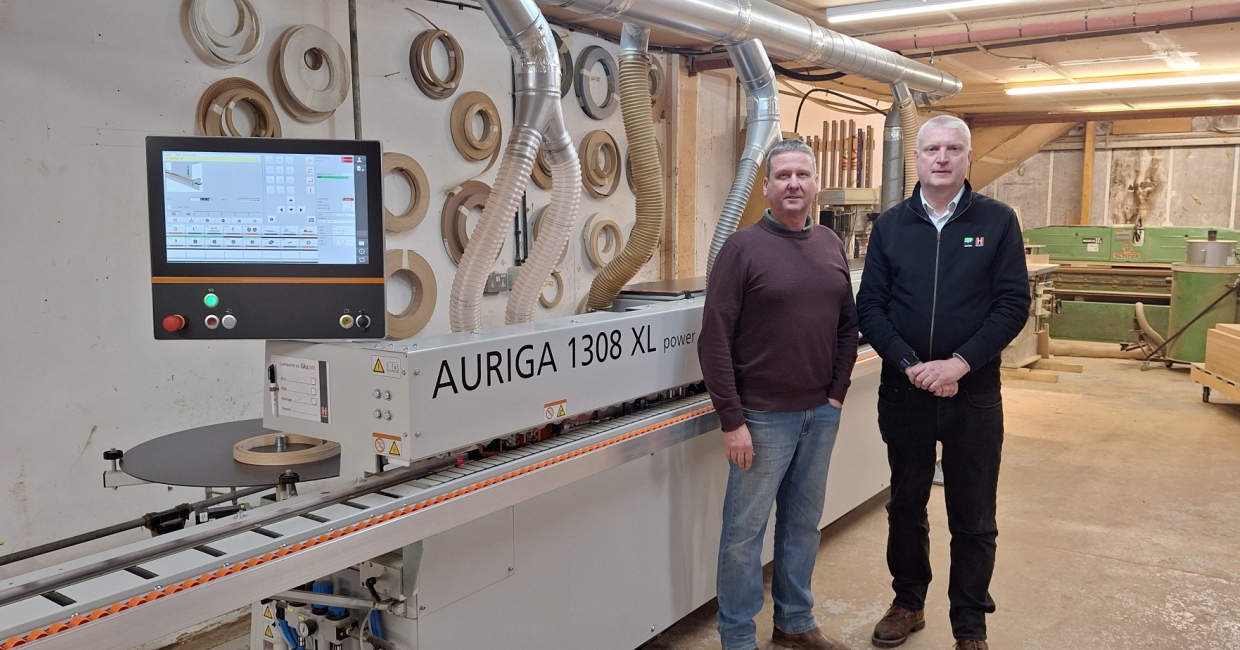
As the business grew, the need for machinery that could support both efficiency and the high-quality bespoke work the company is known for became critical. “We decided to invest in the Holz-Her Auriga edgebander because we wanted the best equipment that would last, improve workflow and allow our team to focus on craftsmanship rather than repetitive manual work,” says Alan Pearce.
“From day one, it has proven itself, saving time, enhancing quality and making previously difficult tasks straightforward.” As the market shifted and cheaper imports introduced new pressures, Rozen Furniture adapted, evolving from traditional bespoke furniture into complete joinery and full house fit-outs. Today, the company delivers elegant freestanding furniture, kitchens and full home interiors, all underpinned by the same commitment to quality and craftsmanship that defined its early years.
This journey reflects a business that has consistently evolved while remaining true to its core values. After completing trade contracts, Rozen Furniture consolidated its operations into a single focus on fully bespoke furniture. This shift required not only skilled craftsmanship but careful investment in machinery to meet growing demand without compromising quality.
Throughout the 1990s, the business expanded rapidly. From a small team of four in 1989, it grew to around 20 employees by the mid-1990s, all working from the same workshop. Investment in machinery was driven by necessity as trade contracts required efficiency, while the same equipment also enhanced the bespoke side of the business by enabling greater precision and creativity.
The story of Rozen Furniture is inseparable from its founder’s personal journey. After completing a two-year fulltime cabinet making course at Falmouth College, Alan faced an uncertain future when his employer, a small furniture business run by an ex-Navy pilot, closed unexpectedly. With limited opportunities for cabinet makers in Cornwall at the time, he made the bold decision to start his own business with a partner. “I was just 19, and I decided to go for it,” Alan recalls. “Funding came entirely through self-investment with a small enterprise allowance grant to buy my first machines. From that modest beginning, the foundation was laid for a company that could grow organically.”
As the company evolved, so too did its workshop and machinery. Early investments were cautious and often second-hand, which sometimes created limitations. Alan remembers starting with basic equipment in a small space and moving through three workshops over the years. The current workshop has been home for 25 years, and while space is always tight, it has supported the company’s continued growth.
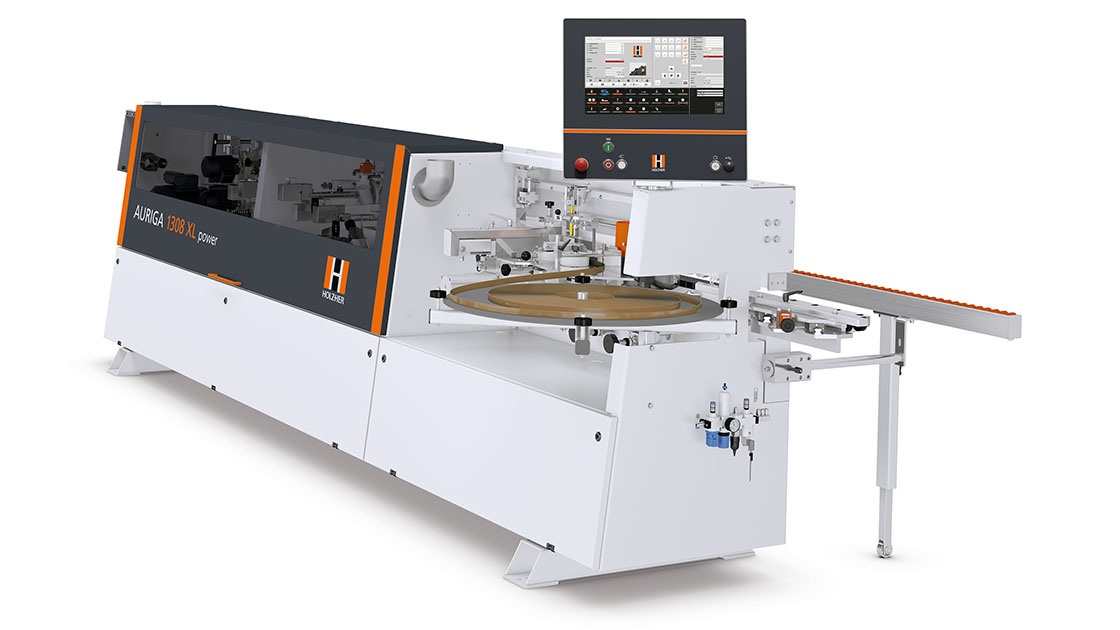
Experience taught Alan that investing in high-quality machinery was essential. A turning point came with the decision to invest in the Holz-Her Auriga edgebander after meeting Antony Jempson, Holz-Her’s Area Manager and seeing demonstrations at the company’s Abingdon facility.
“I looked at a few other machines, but the Auriga really sold itself. It is probably second to none in what it achieves and what it will achieve for us,” he explains. “We wanted machinery that would last, be high quality and easy to use for the team. From day one, it has gone straight into production, saving time and reducing repetitive manual work.”
Alan describes the Auriga’s Glu Jet Thin Film Technology as transformative. “Using PUR glue used to be a nightmare, especially for fire doors or damp areas like kitchens. Now we can do those jobs in an hour that would have taken a day and a half before. The joints are invisible, strong and waterproof. It is a massive improvement in efficiency and quality.”
He also praises the iTronic and intelligent servo automation. “All our programmes are stored in the machine, so anyone can call them up quickly. It reduces mistakes and lets our staff focus on more skilled tasks. Before, everything was manual, time-consuming and required constant supervision. Now it is straightforward and reliable.”
“We are getting a consistent finish every time,” Alan says. The Auriga also accommodates workpieces up to 60 millimetres thick and edges up to 8 millimetres thick. “That gives us the flexibility to process large island units, cabinetry and complex components accurately and efficiently. It has opened up new possibilities in what we can produce.”
Strong after-sales support and on-site training provided by Holz-Her’s highly-skilled aftercare team also impressed Alan. “The Holz-Her engineers spent four days on site with our staff, setting up programmes and making sure everyone was confident from day one. The combination of performance, reliability and support aligns perfectly with our philosophy of investing in the best equipment available. We still have Weinig machinery from the late 1990s performing reliably, so we know quality lasts.”
The company name itself reflects its roots. Rozen is Cornish for Rose, a nod to Alan’s heritage and the original idea of marking each piece of furniture with a rose emblem. While that idea was never fully realised, the company has periodically incorporated branded discs into its work and is now revisiting the idea as a way to reinforce pride, authorship and legacy within the workshop. For a business that builds furniture to last generations, the ability to identify and sign pieces remains an important part of its craft ethos.
Nearly 40 years after its founding, Rozen Furniture continues to balance craftsmanship with forward-thinking innovation. With a team of more than 20 people, the focus is now on sustainable growth, bringing in key individuals to ensure the business can continue to thrive while reducing Alan’s day-to-day workload. The aim is not rapid expansion but continuity, stability and the ability for the company to endure.
While thoughts of retirement are beginning to surface, the future of Rozen Furniture remains firmly rooted in its reputation for quality and adaptability. “We have always focused on craftsmanship, attention to detail and making furniture our clients love,” Alan reflects. Machinery and innovation play an important role, but the heart of the business remains unchanged.
As Rozen Furniture approaches its 40th anniversary, its story is one of passion, skill and considered decision-making. From a small Cornish workshop to delivering bespoke interiors at scale, the company continues to shape spaces and experiences one carefully crafted piece at a time. With the right team, the right tools and decades of expertise, the future looks as finely made as the furniture that carries the Rozen name.
With the impact of the Holz-Her Auriga edgebander already transforming daily production, Rozen Furniture is well-positioned to meet increasing demand while continuing to deliver exceptional craftsmanship through improved efficiency and reliability. The investment reflects a shared commitment to quality, longevity and performance, with Holz-Her technology playing a central role in the workshop’s future.
For more information on Holz-Her machinery or to arrange a demonstration, contact the UK team via email at [email protected].