
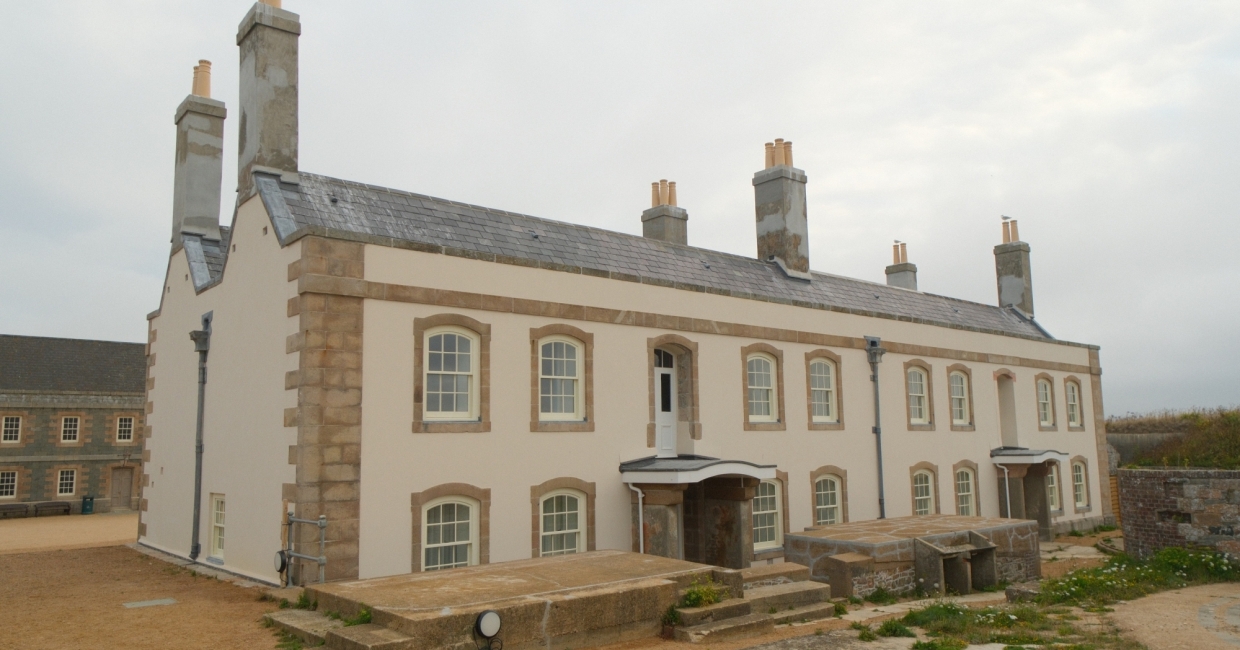
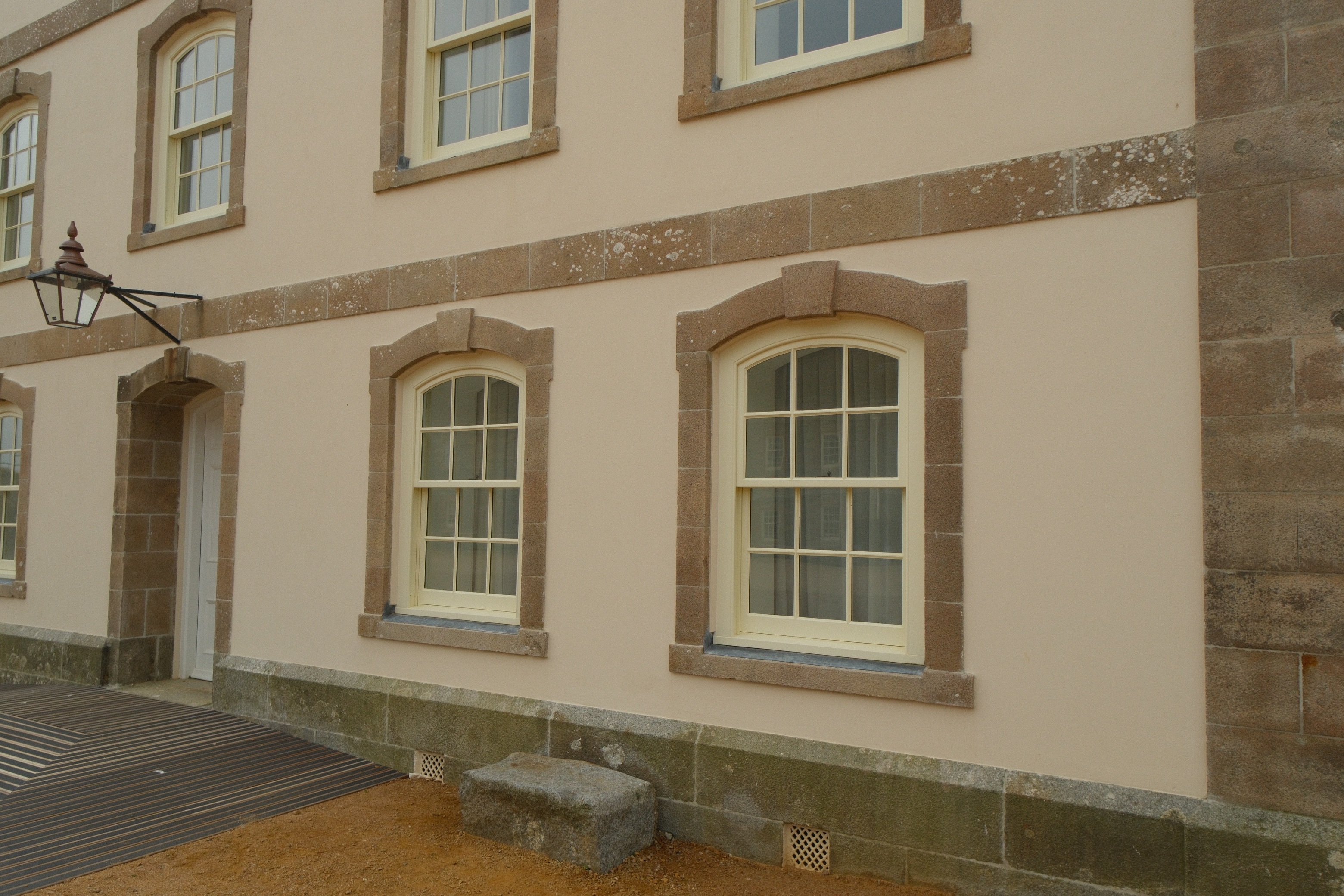
Mumford & Wood’s bespoke timber sash windows and entrance door combine heritage craftsmanship with a high-performance Teknos exterior wood coating system, protecting Elizabeth Castle against Jersey’s salt-laden air, wind and rain.
Standing guard over St Helier Harbour, Elizabeth Castle has defended Jersey’s coastline for centuries. Today, the island fortress faces a different but relentless adversary: the weather.
Its exposed position leaves the buildings open to salt-laden air, high winds, rain, moisture and strong sunlight. For timber windows and doors, these are everyday challenges.
Restoring the windows and doors in the Castle’s original Officers’ Barracks was therefore much more than an exercise in faithfully recreating historic joinery. The new units also needed to provide long-term protection and modern performance in an exceptionally demanding coastal environment.
Mumford & Wood was commissioned to design and manufacture 35 bespoke classic box sash windows and one entrance door as part of the Castle’s wider conservation programme. Completed in early 2025 following a two-year programme, the project brought together traditional craftsmanship, modern timber engineering and a factory-applied Teknos coating system.
Timber selected for stability
The windows were handcrafted from engineered redwood and red grandis, selected for their dimensional stability, weather resistance and sympathetic grain character.
Timber movement is particularly important in an exposed location. Repeated changes in moisture and temperature can cause components to swell and contract, placing additional stress on joints, glazing lines and the coating film. Selecting stable timber and engineering it correctly provide the foundation for long-term performance.
The coating specification adds further layers of protection. The Teknos system for red grandis and engineered redwood comprises TEKNOL AQUA 1410-01 wood preservative, ANTISTAIN AQUA 2901-00 primer and AQUATOP 2600-23 water-borne industrial topcoat. For Elizabeth Castle, the finish was colour-matched to a heritage white with the pale-yellow tone of the original windows.
Protection built in layers
The first stage, TEKNOL AQUA 1410-01, protects the wood surface and treated area against wood-destroying and wood-discolouring fungi. Intended for exterior windows and doors, it meets EN 599-1 requirements and also helps improve the dimensional stability of the timber.
ANTISTAIN AQUA 2901-00 provides the next layer. The water-borne industrial primer helps reduce surface discolouration caused by tannins in hardwood, an important consideration when producing a consistent, high-quality opaque finish over red grandis.
AQUATOP 2600-23 completes the system, providing the finished colour and weather-resistant surface. Developed for exterior timber windows and doors, it is a water-borne industrial topcoat. The exterior durability of coating systems incorporating AQUATOP 2600 is typically documented in accordance with EN 927-2.
Matching every layer to the timber, manufacturing process, glazing method and exposure conditions turns three coating products into one effective protective system.
“Years of testing and optimisation have given Teknos extensive knowledge of how its coating systems behave across different timber species, manufacturing methods and exposure conditions”
In coastal joinery, the details count
A coastal environment quickly exposes weaknesses in joinery and coating application. Wind-driven rain and salt-laden moisture can reach glazing lines, joints, corners and other vulnerable areas. Small gaps or inadequately protected end grain can become routes for water ingress.
“End grain is one of the first places we look at on a project like this,” explains Craig Lovatt, Head of Region UK & Ireland for Exterior Coatings at Teknos. “It absorbs moisture much more readily than the face of the timber, so effective sealing makes a real difference. In a location as exposed as Elizabeth Castle, protecting these small but vulnerable areas is essential.”
The Teknos system is microporous, allowing water vapour within the timber to escape while protecting its surface from the weather. This helps avoid trapping moisture behind the coating film, where it could contribute to coating failure or timber decay.
Traditional details introduced further complexity. The linseed oil putty glazing used at heritage properties such as Elizabeth Castle requires a compatible coating specification. Apparently small decisions like this can have a disproportionate effect on long-term performance.
Years of testing and optimisation have given Teknos extensive knowledge of how its coating systems behave across different timber species, manufacturing methods and exposure conditions. For the joinery manufacturer, this provides confidence when technically demanding projects arrive at the factory door.
Factory finishing for an exposed location
Applying the complete system under controlled factory conditions enabled Mumford & Wood to manage preparation, coverage and film build before the joinery reached the island.
Factory application also allows areas that may be difficult to reach properly after installation to be protected. Consistent coverage around joints, glazing details and end grain reduces the risk of moisture finding a weak point in the finished joinery.
Mumford & Wood has worked with Teknos for more than 15 years. Managing Director Matthew Blaylock explains why the relationship has lasted, “We know the Teknos systems work well with our production processes, whether we’re making a large run of windows or something completely bespoke. Elizabeth Castle was a particularly demanding project. We needed modern coating performance, but the finished windows still had to look completely authentic to the building. They look stunning, and it is reassuring to know the coatings are designed to perform in such an exposed location.”
Maintenance remains part of performance
Even the best factory-applied coating system needs inspection and care, particularly where exposure is severe and minor damage can deteriorate more quickly than it would in a sheltered inland position.
Regular cleaning removes deposits such as salt and dirt. Periodic inspection can identify early signs of damage around exposed edges, joints and glazing lines, allowing local repairs to be completed before moisture finds a route into the timber. The objective is planned, straightforward maintenance rather than major remedial work following a failure.
For Elizabeth Castle, stable engineered timber, precise joinery, controlled factory finishing and appropriate maintenance combine to provide a robust defence against the coastal environment.
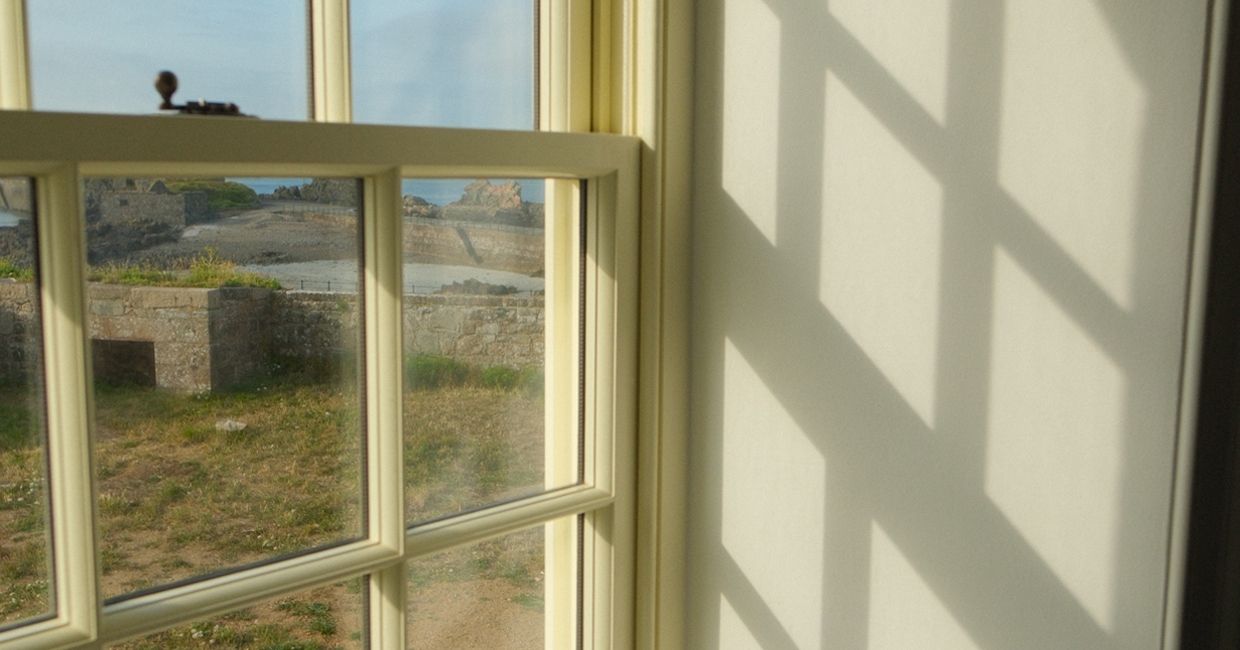
The restored sash windows now preserve the visual character of the Officers’ Barracks while delivering improved energy efficiency, durability and lower maintenance. They look entirely at home in the historic fortress, which is perhaps the greatest compliment modern joinery can receive.
The craftsmanship and coating performance work as one, whatever the sea sends their way.