
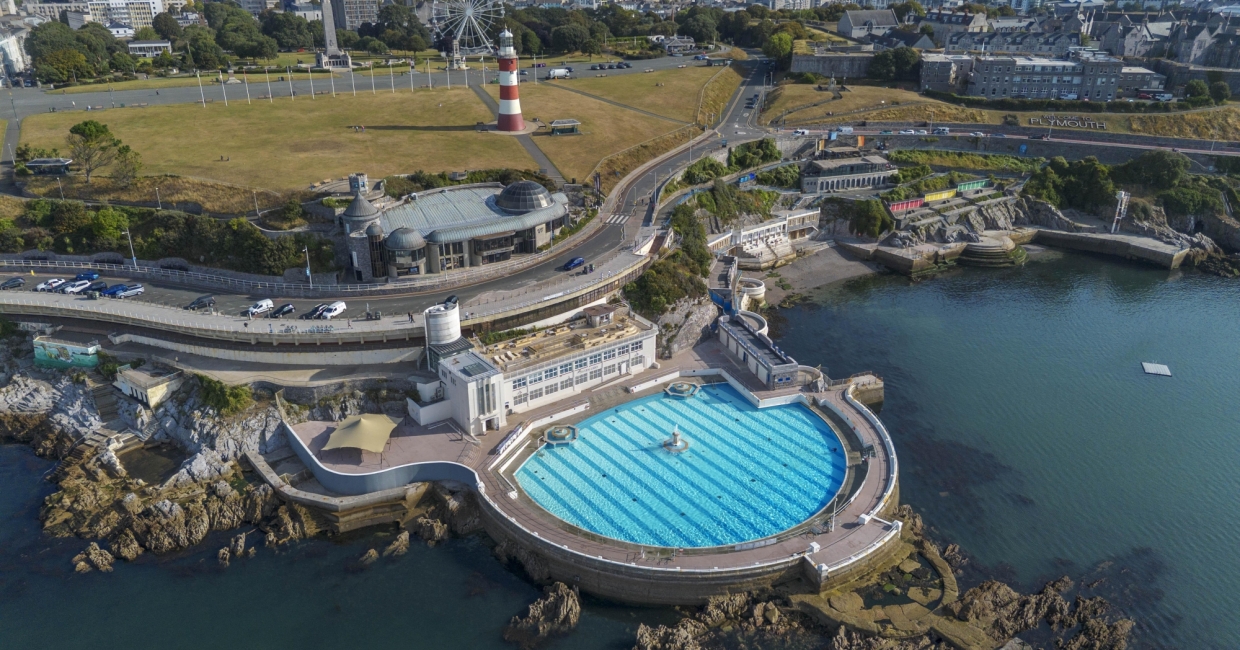
Accoya and Medite Tricoya Extreme were selected as key materials in the restoration of Tinside Lido – a Grade II Listed Art Deco landmark located on Plymouth Hoe.
Commissioned by Plymouth City Council as part of its National Marine Park project, the redevelopment aims to transform the 1935 seafront structure into a viable year-round public destination, while safeguarding a heritage asset exposed to one of the UK’s harshest marine environments.
Designed by LHC Design, the scheme required materials capable of withstanding salt spray, sustained humidity, storm exposure and heavy public use, while also supporting long-term durability and reduced maintenance requirements.

Accoya was specified across a range of applications, including sun terrace decking, external doors, windows, benches, planters and handrails, alongside sensitive joinery restoration works. Medite Tricoya Extreme panels were engineered into large-format seasonal storm shutters, designed to provide robust, low-maintenance protection during winter months.
Matt Oxley, architect at LHC Design, said: “At Tinside Lido, every specification decision had to support longevity, precision and aesthetics in one of the UK’s most challenging coastal environments – no small task.
“Accoya allowed us to revitalise the Lido’s Art Deco elegance with durable, low-maintenance elements that will endure decades of public use.”
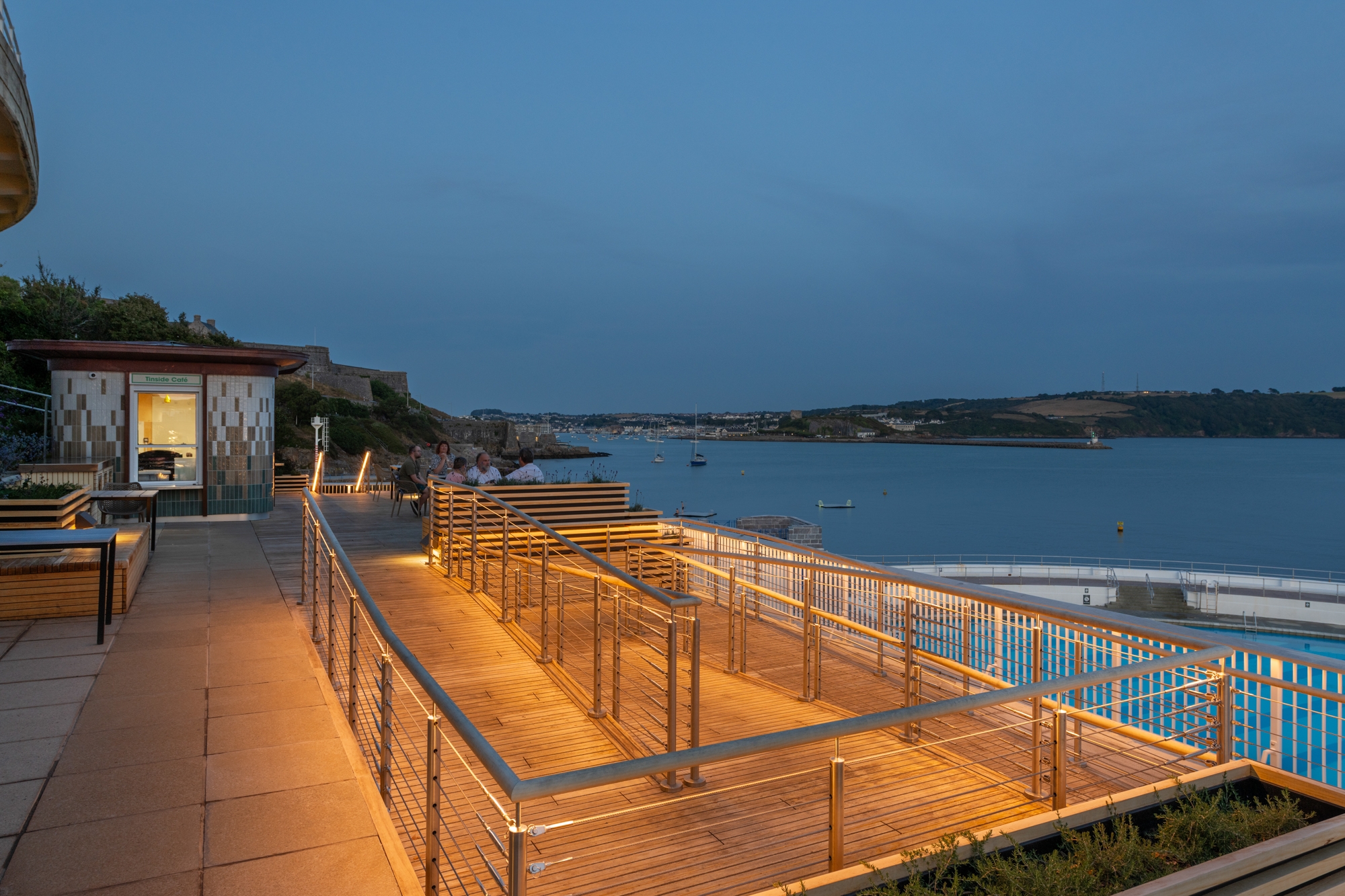
According to the project team, Accoya’s stability and durability allowed the design team to introduce slimmer profiles and tighter tolerances, particularly across curved and exposed components aligned with the Lido’s Art Deco geometry, while maintaining structural reliability.
Left uncoated, the timber is intended to weather naturally to a silver-grey finish, reducing ongoing finishing requirements while complementing the surrounding coastal environment.
Sustainability was also a key consideration throughout the specification process. Accoya’s FSC-certified sourcing and extended service life supported the project’s low embodied carbon objectives, while reduced maintenance and replacement requirements are expected to improve long-term operational efficiency.