
Renner Coatings UK is combining technical depth, national delivery capability and long-term investment in infrastructure to support the changing needs of British manufacturers. John Legg went to meet the team driving that strategy.
For UK furniture and joinery manufacturers, finishing systems play a critical role in both product performance and production efficiency. Beyond aesthetic considerations, coatings are now expected to support regulatory compliance, sustainability targets, durability in demanding environments and increasingly tight production schedules.
As a result, manufacturers are placing greater emphasis on the technical capability and operational resilience of their finishing suppliers, rather than viewing coatings as a purely consumable input.
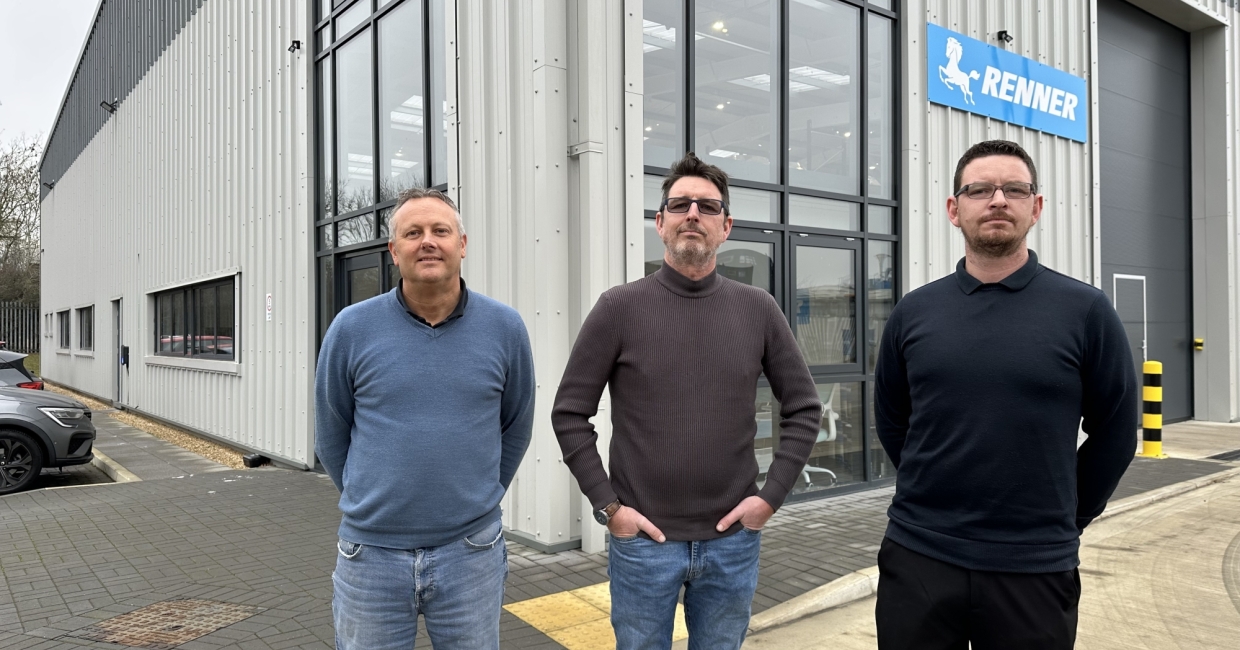
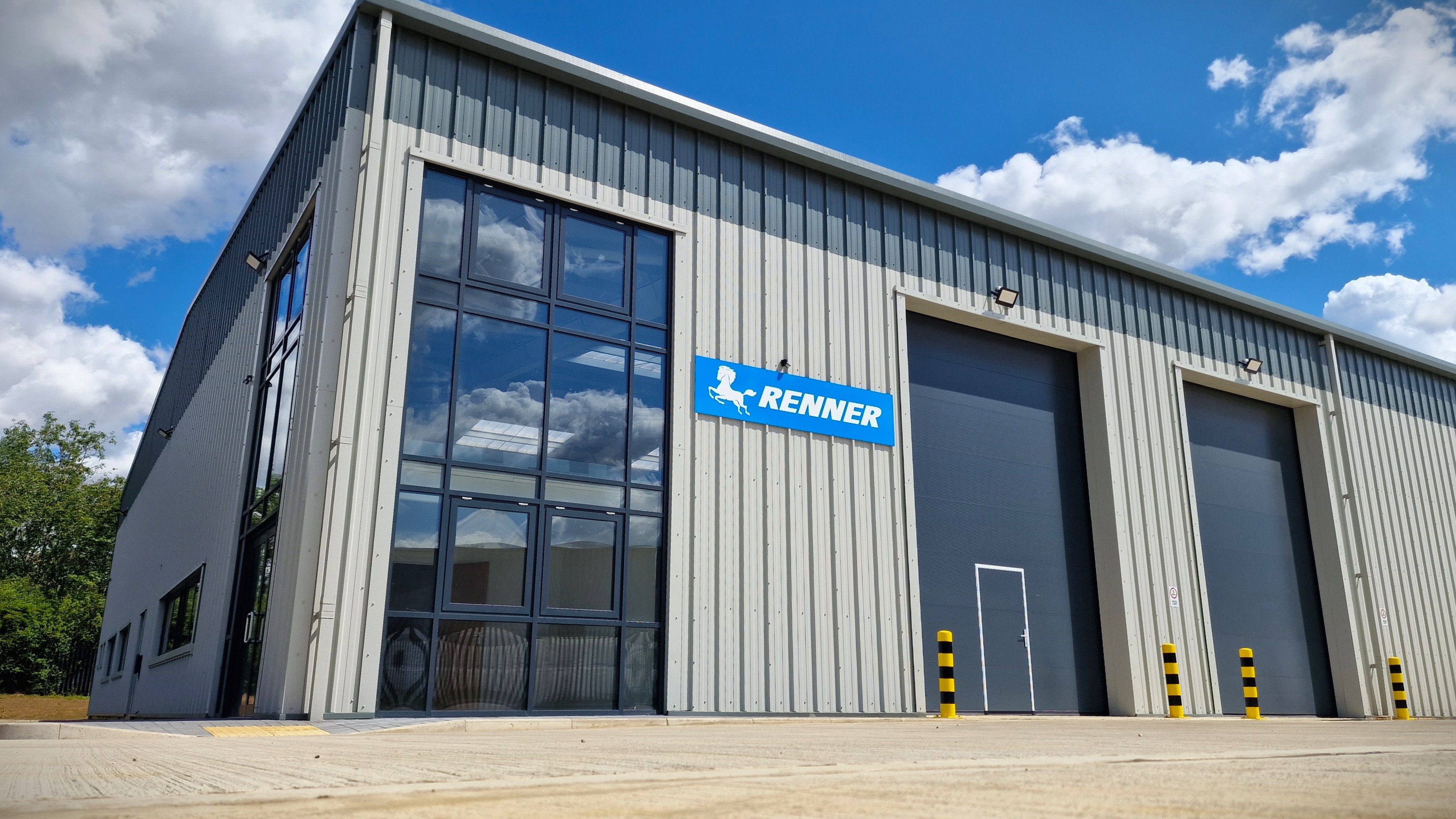
It was within this context that Furniture & Joinery Production visited Renner Coatings UK at its bright, new Corby facility, to examine how the business is structuring itself to support the UK market and what that means in practical terms for manufacturers operating across furniture, cabinetry and architectural joinery.
A UK-focused business model backed by global formulation expertise
Renner Coatings UK operates as a dedicated UK business, serving British manufacturers with finishing systems developed to meet national production and regulatory requirements. While the company benefits from the formulation depth, research capability and scale of parent organisation Renner Italia, the UK operation is structured around national delivery, technical responsiveness and operational autonomy.
This distinction is important in a market where manufacturers increasingly expect suppliers to engage directly with production realities rather than relying solely on centralised distribution models. In Corby, Renner Coatings UK has invested in a facility that goes beyond stockholding alone, incorporating technical validation, application support and customer engagement within a central hub supporting customers across the UK.
For manufacturers, this approach reduces uncertainty at the specification stage and improves confidence during implementation, particularly where finishing systems form a critical component of the final product rather than an interchangeable commodity.
Operational infrastructure designed for reliability and future scale
Operational responsibility for the UK business sits with Director of Operations Justin Thurland, whose background in kitchen manufacturing brings a production-led perspective to the role. Having previously used Renner finishing systems in a manufacturing environment, Justin joined the business shortly before the onset of the Covid period, and drives the development of an operational model designed around continuity and resilience.
Alongside this focus on operational robustness, sustainability has become embedded in the day-to-day running of the business. Justin notes that environmental responsibility now extends beyond product development and into the full operational ethos of Renner UK, shaping daily practices across warehousing, administration and site management. The business is actively working to become more eco-efficient, with a strong emphasis on reducing overall waste. Currently, more than 85% of waste is recycled, reused or — in the case of food waste — composted, with ongoing initiatives in place to increase this figure further.
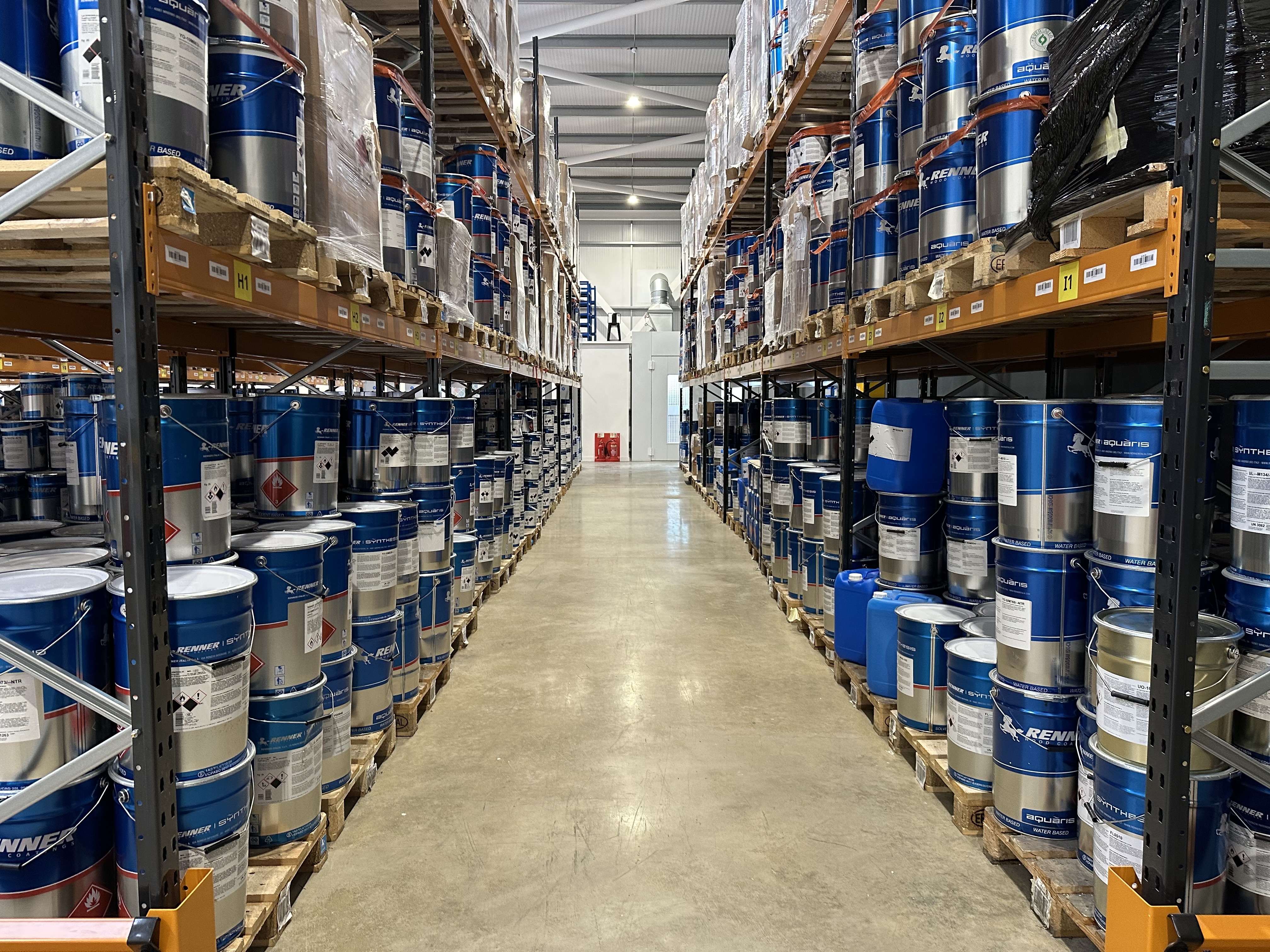
The Corby facility itself is laid out to support logical workflow and efficient product handling. Customer-facing offices are positioned at the front of the building, directly connected to a substantial warehouse operation designed to support consistent availability and clear stock management. The current warehouse configuration consists of 10 sections of racking, 18 bays long and three high, giving 540 Euro pallet spaces, equating to around 540 tonnes of materials.
For manufacturers operating just-in-time or high-throughput production models, this physical integration between sales, technical and logistics functions can be critical.
Beyond warehousing, the site incorporates a sealed, air-conditioned technical laboratory where product mixing, testing and verification are carried out using computer-controlled equipment. This controlled environment allows Renner UK to replicate production conditions accurately, supporting both internal validation and customer-specific testing.
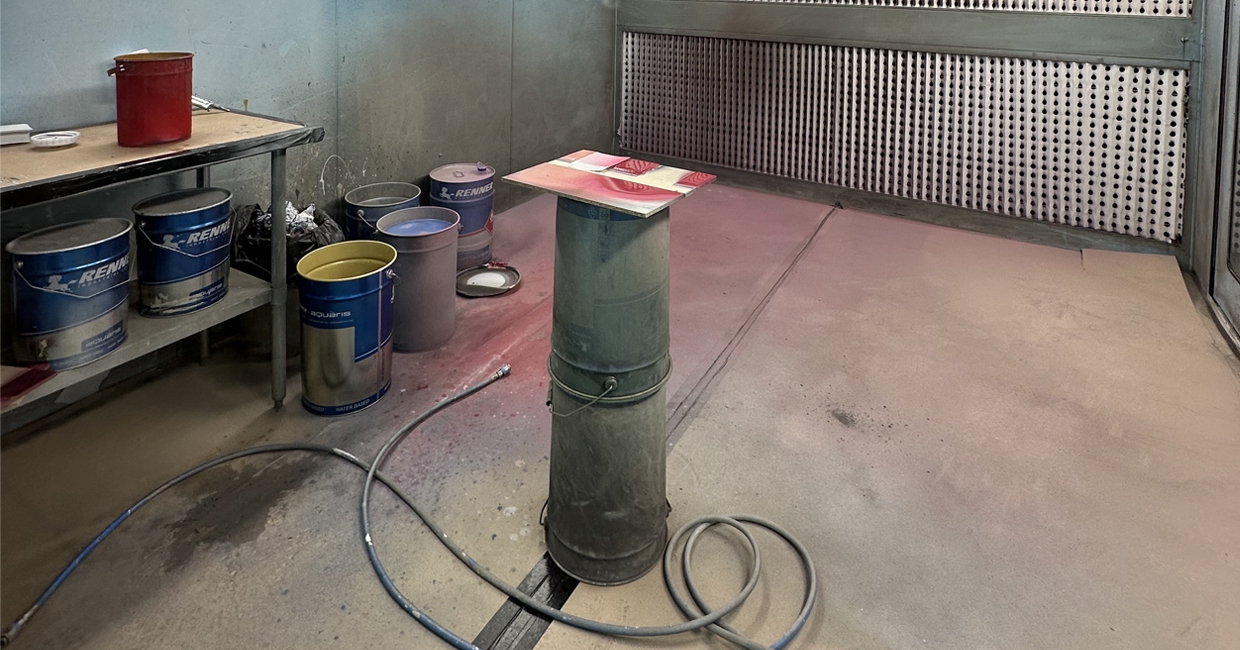
Adjacent to the laboratory sits a fully equipped spray booth, used to validate application performance and system compatibility. This facility is also made available when customers require onsite trials using their own substrates, components or production parameters — an important capability when introducing new finishing systems or responding to specification changes.
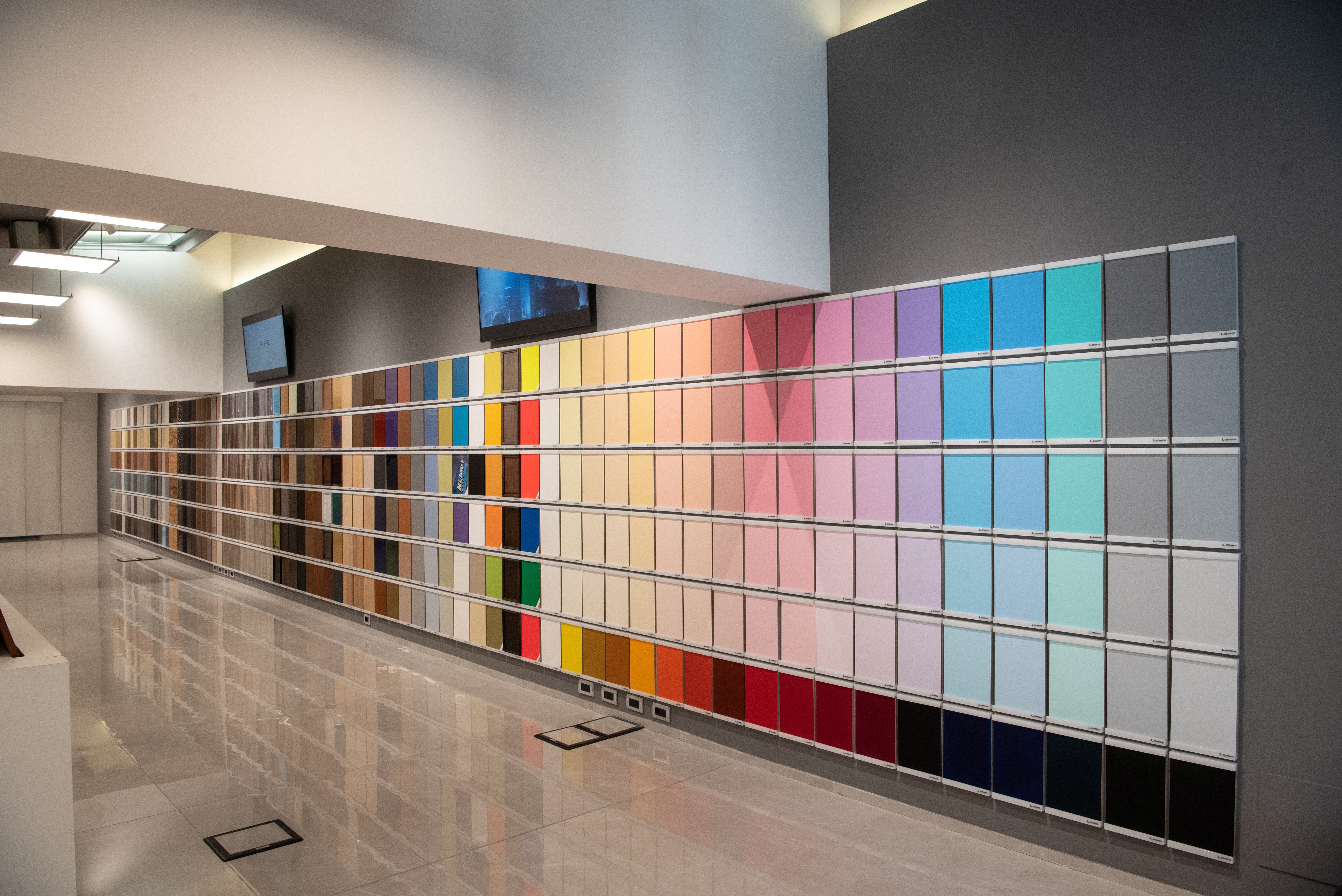
Above the laboratory is a dedicated storage area allowing finished samples to be catalogued, stored and retrieved efficiently. This supports specification work, benchmarking and repeatability, particularly when manufacturers are supplying multiple sites or product variants.
Warehouse storage is arranged across multiple high-bay racking sections, providing significant on-site capacity. The building itself has been designed with future expansion in mind, allowing for vertical extension should increased throughput, additional product lines or expanded technical capability be required. The ceiling height growth would allow a further increase of 25% racking storage capacity to ensure future growth. Sustainability was also a core consideration during the development of the new warehouse, with a clear focus on maximising energy efficiency without compromising productivity or the working environment.
Taken together, the Corby facility is a professionally resourced operation designed for stability, scale and proactive customer service, rather than short-term volume growth.
Technical leadership aligned with manufacturing reality
Technical direction within Renner UK is provided by Ian Tapp, Technical and Financial Director, though his day-to-day focus remains firmly rooted in technical performance, formulation and application rather than financial administration. With experience gained across several major coatings businesses and longstanding professional relationships with Renner Italia’s senior technical teams, Ian plays a central role in aligning advanced formulation capability with UK manufacturing requirements.
For manufacturers operating within kitchen, bedroom and bathroom sectors, finishing systems are routinely exposed to moisture, heat, cleaning chemicals and sustained use. In such environments, adhesion, chemical resistance, film integrity and long-term durability are essential. However, Ian emphasises that technical performance must also be balanced against production efficiency, consistency and ease of application.
“Laboratory performance alone is not enough,” he notes. “Systems must perform reliably in production situations, day in, day out.”
This thinking underpins Renner Coatings UK’s approach to system validation. Rather than promoting individual products in isolation, the technical team focuses on complete finishing systems – from primers and sealers through to topcoats – ensuring compatibility, predictable curing behaviour and repeatable results under real production conditions.
The on-site laboratory and spray facilities allow systems to be evaluated not only for compliance with performance standards, but also for practical considerations such as drying times, sanding characteristics and cross-linking behaviour. This is particularly relevant for manufacturers seeking to optimise throughput or reduce rework without compromising finish quality.
Water-based, solvent-based and application-led decision making
Environmental regulation and sustainability targets continue to influence specification decisions across the UK furniture and joinery sector. As a result, water-based, low-VOC finishing systems now form an increasingly significant proportion of Renner UK’s offering. These systems support compliance while delivering performance levels suitable for a wide range of interior and exterior applications.
However, solvent-based polyurethane and polyester systems remain relevant where specific durability, build or aesthetic characteristics are required. According to Ian, technical decision-making must remain application-led rather than driven by technology preference alone.
In high-humidity environments, for example, or where high-gloss finishes are required, solvent-based systems may still provide advantages in terms of film build and curing behaviour. The role of the technical team is to guide manufacturers through these decisions based on end-use performance and production constraints rather than headline specification alone. Highlighting the complexity of modern manufacturing requirements, Ian says: “The challenge is to ensure we have a product that is compatible with all substrates. For example, some manufacturers use a mix of primed wood, melamine, and PVC, so we must ensure the system performs consistently across all of them in terms of chemical resistance and adhesion. We don’t see this as a negative challenge, but rather an exciting one – it really tests our thinking and gets the adrenaline going.”
Fire-retardant coatings also form part of the technical portfolio, particularly for architectural joinery and publicsector applications where certified fire performance is required. These systems introduce additional complexity in application and validation, reinforcing the importance of controlled testing and technical support during specification and implementation.
Ian says: “Renner Italy has been working extensively to develop products that meet the market’s growing requirements for fire-retardant performance. We have entered the market with systems achieving Euroclass B certification, as well as solutions designed to meet marine fire-retardant specifications. This is an area we will continue to develop, as it is becoming increasingly important and prosperous.”
Discussing how both technology and customer requirements are reshaping the market, Ian explains: “At the moment, we have many projects running on water-based systems. The Renner water-based range is tailored to meet specific customer requirements, whether that is improved chemical resistance, enhanced mar resistance, or adhesion performance. These systems are very well suited to customers who have the correct drying schedules in place.
“Currently, the split remains approximately 50/50 between solvent-based and water-based systems. However, there are still certain finishes that require solvent-based products, for example, some high-gloss finishes used in yacht interiors or other specialist applications. “My background began with polyester UV-curing systems and redox polyesters. While there is still a demand for these technologies, it is significantly lower than it was 20 years ago.
“Twenty years ago, we did not have the large-scale producers of bedrooms and kitchen doors that we see today. As a result, the target market has changed considerably, and alongside this, the technology and the skill set required for these finishing systems have also changed.”
Commercial strategy built around integration and continuity
The commercial interface between Renner Coatings UK and its customer base is led by Sales Director Joe Tapp, whose career spans more than 25 years in wood finishing. Beginning with handson finishing experience – including seven years working on high-quality piano production – Joe has held roles across technical sales management, and logistics since joining the business in 2009.
This breadth of experience informs a sales strategy focused on integration into customers’ production processes rather than simple transactional supply. For Tier 1 and Tier 2 manufacturers, particularly within kitchen, bedroom and bathroom sectors, finishing systems are directly embedded in the final product. Any inconsistency in supply, quality or performance can quickly become a reputational and commercial risk.
As a result, supplier relationships at this level are typically built on long-term collaboration, technical alignment and clear communication. Renner Coatings UK’s sales structure reflects this, with regional management supported by central technical and operational resources at Corby. Across the UK, Renner has a number of area sales managers supporting clients.
While large-volume manufacturers naturally require robust availability and continuity of supply, the same infrastructure also supports smaller manufacturers and bespoke joinery businesses. For these customers, access to testing facilities, clear technical guidance and responsive support are equally as important, even where volumes are more modest.
Describing a broader transformation in client–supplier relationships across the UK market, Joe notes: “Customers’ needs are evolving from that of simply purchasing a product to relying on supply partners to assist with problem solving, professional development and access to the latest technical knowledge. This more collaborative approach creates unique opportunities for both parties to benefit from the other’s strengths, which in turn builds supply chain resilience, sustainability and innovation.
“This change in the client-supplier relationship demands professional agility across the entire organisation as well as a flexible and responsive business structure. Renner UK prides itself on the ability to pivot, demonstrating organisational resilience and a continuous drive for improvement.”
Product capability supported by validation rather than breadth alone
From a product standpoint, Renner Coatings UK supplies a comprehensive range of finishing systems covering furniture, cabinetry and architectural joinery. This includes primers, sealers, topcoats, stains and specialist coatings for both interior and exterior applications.
Rather than positioning range breadth as an end in itself, the emphasis is placed on system performance and validation. On-site testing facilities allow products to be assessed in combination, reducing the risk of incompatibility and improving confidence before systems are introduced into production.
For manufacturers, this approach supports more predictable outcomes, reduced rework and greater consistency across production runs – factors that are increasingly important as production lines become more automated and tolerances tighter.
Demonstrating confidence through capability
Across discussions with Renner Coatings UK’s leadership team, a consistent theme emerged: confidence in the UK market expressed through structure and behaviour rather than assertion. It stands to reason that the products it supplies deliver in term of overall performance, but it’s the company’s investment in people, infrastructure and technical process which points to a business focused on long-term engagement rather than rapid market capture.
For UK furniture and joinery manufacturers navigating complex production, regulatory and commercial pressures, this measured approach is likely to resonate. At Corby, Renner Coatings UK presents itself as a business structured to support those needs, demonstrating confidence in the UK market through the operational and technical capability it has chosen to put in place.
01536 402788