
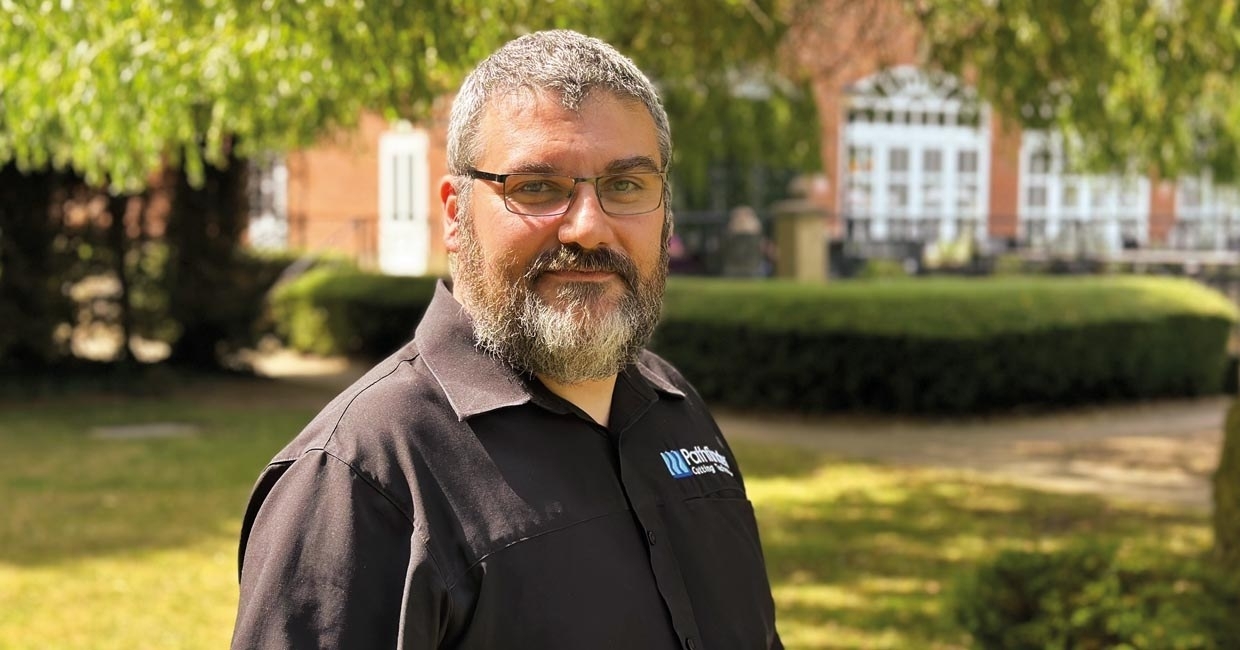
As manufacturers place increasing emphasis on long-term value, reliability and ease of ownership, Pathfinder Cutting Technology believes successful automation starts with understanding the realities of the factory floor. John Legg met UK Sales Technician John Kyprianou to discuss why straightforward engineering, transparent ownership and long-term support are proving every bit as important as cutting performance.
There is an easy confidence about John Kyprianou. Spend an hour in his company and it quickly becomes clear that, despite his title of Sales Technician, he is far more interested in discussing engineering than delivering a sales pitch. Our conversation ranged from Australian manufacturing and the changing fortunes of British industry to operator training, software development and machine longevity, yet every topic returned to the same point: understanding what manufacturers actually need.
That is perhaps the most revealing insight into Pathfinder Cutting Technology itself. Founded in Melbourne in 1996, Pathfinder has spent three decades developing automated cutting technology around a remarkably consistent philosophy. While the company has established its own UK operation only within the past three years, its approach has changed little over that time: engineer robust, reliable machinery, make it straightforward to operate and ensure customers retain confidence in their investment long after installation.
“We’re not one of those companies that just wants to sell for the sake of making a sale,” John explains. “If there is a solution that’s a better fit for the customer, we’d rather have that conversation.” It is a simple remark, but one that neatly reflects the philosophy underpinning the wider business.
Understanding the customer
Innovation is a familiar theme within manufacturing, but Pathfinder’s interpretation is refreshingly practical. Rather than treating innovation as a race to add more features or greater complexity, the company asks a much more fundamental question: does it genuinely improve life for the customer?
That thinking influences everything from machine design to software development. Unlike many manufacturers, Pathfinder develops its own software and control systems alongside its machinery, allowing the product to be engineered as a complete system rather than a collection of individual components. Rather than relying on third-party software providers, Pathfinder retains complete control over development, enabling new features, refinements and customer feedback to be incorporated quickly while ensuring the software evolves in step with the machines themselves.
For customers, that means a platform designed specifically for their equipment rather than software adapted to fit a wide range of machines. Customer feedback flows directly to the engineers responsible for the next generation of improvements, creating a continuous cycle of refinement driven by real-world production.
Throughout our discussion, John repeatedly returned to the importance of listening. Whether customers identify refinements to the software, improvements to machine operation or more efficient ways of carrying out routine tasks, those observations become valuable engineering input rather than routine aftersales feedback. It is an approach that keeps development firmly rooted in the realities of the factory floor.
Engineering for simplicity
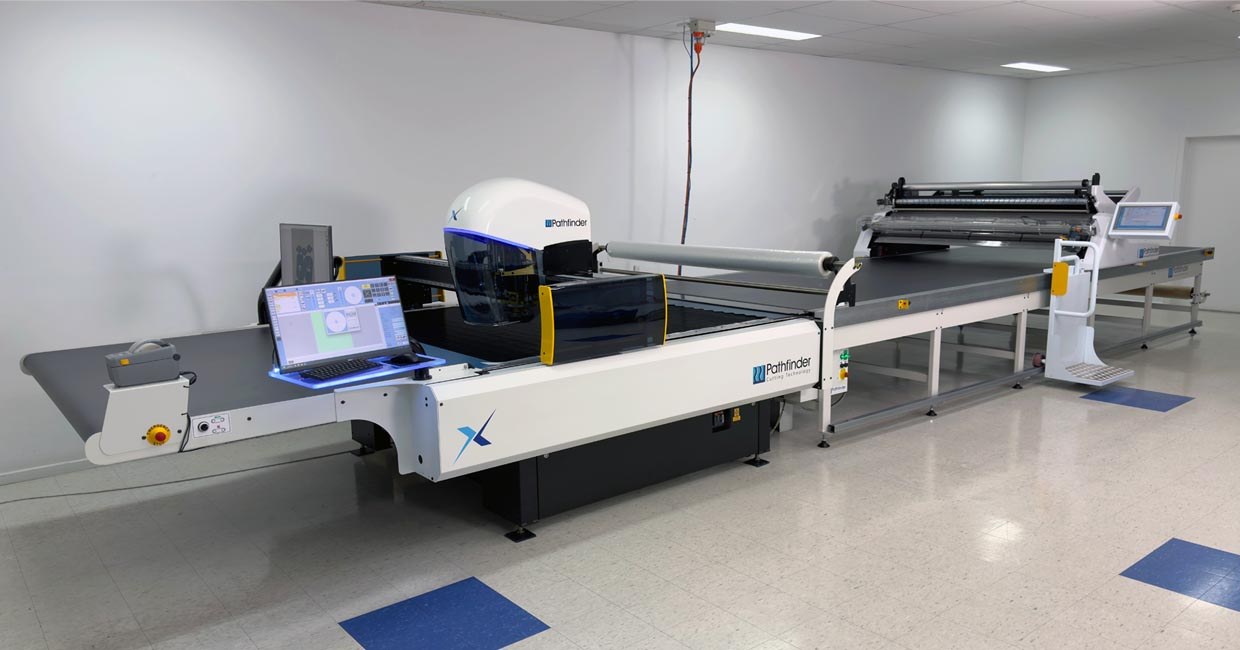
Developing both the machinery and the software in-house allows Pathfinder to engineer the complete ownership experience rather than simply supplying individual components. The software is designed as an integral part of the machine, with the emphasis firmly on usability, capability and reliability rather than becoming a product in its own right.
The result is a system that feels cohesive. Customers receive software developed specifically for the equipment they own, avoiding the complexity of separate software subscriptions while benefiting from a platform designed to evolve alongside the machinery itself.
Perhaps the most interesting aspect of Pathfinder’s philosophy is the way it approaches sophistication. Modern cutting systems inevitably involve highly advanced engineering, yet considerable effort has gone into ensuring operators are largely insulated from that complexity. The objective is not to reduce capability but to make it intuitive. Software should guide rather than confuse, interfaces should feel logical rather than intimidating and operators should spend their time thinking about production rather than navigating menus.
It is a philosophy that has remained central to Pathfinder since its earliest machines: sophisticated engineering should simplify manufacturing, not complicate it.
Ownership without complication
That same philosophy extends well beyond installation. Rather than viewing commissioning as the end of the sales process, Pathfinder regards it as the beginning of a long-term relationship. It also shapes the commercial model. At a time when recurring software licences and long-term service agreements are becoming increasingly common across manufacturing; Pathfinder has deliberately chosen a more straightforward approach.
Customers own the software supplied with the machine, eliminating the ongoing licence fees that have become increasingly common elsewhere in the industry. Servicing is available on a simple pay-as-you-go basis, allowing manufacturers to choose the level of support that best suits their business rather than committing to expensive long-term service contracts. It is a deliberately transparent ownership model that gives customers greater control over the lifetime cost of their investment.
Preventative maintenance, responsive technical support and continual software development remain central to the Pathfinder offering, but the emphasis is on providing support when customers need it rather than creating unnecessary commitments. It is a model that reflects the company’s wider belief that ownership should be every bit as straightforward as operation.
John speaks as readily about durability, maintenance and operator confidence as he does cutting performance. That is perhaps unsurprising given the markets Pathfinder serves. Furniture manufacturing remains a core sector for the UK business, but the company’s machines are equally at home processing upholstery fabrics, technical textiles, composites, automotive seating materials and other specialist applications where consistency, material utilisation and reliability matter every bit as much as outright speed.
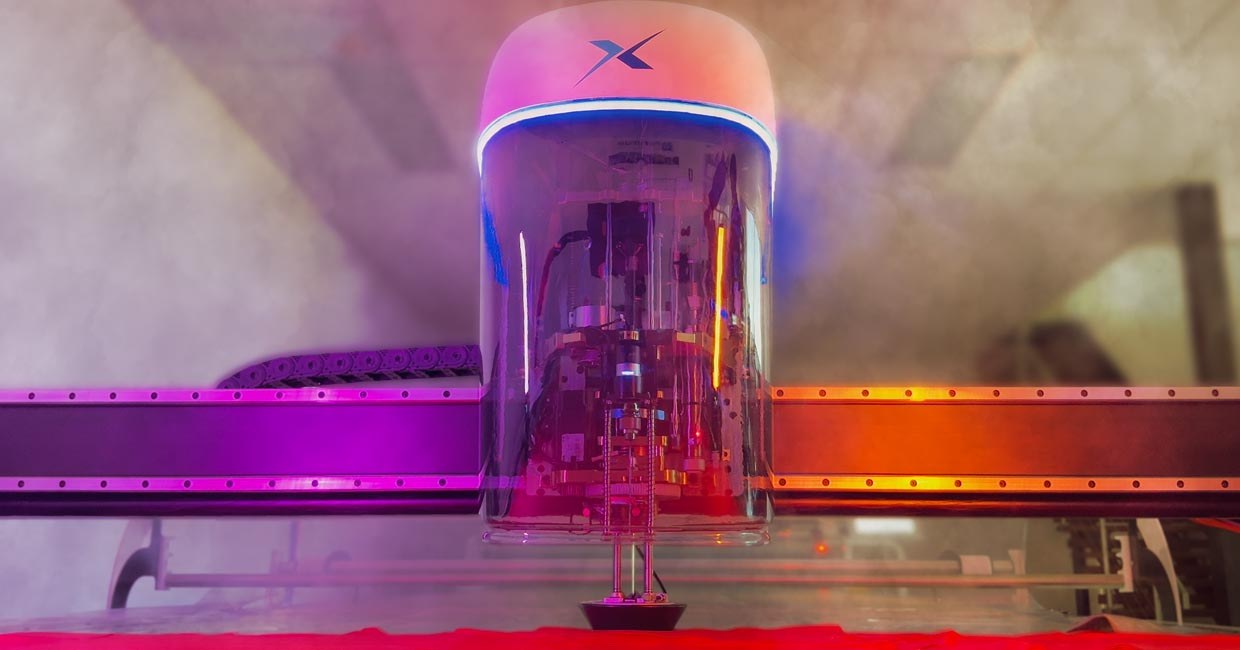
Built for the long term Those diverse applications reinforce another important lesson. Manufacturers are investing more carefully than ever, looking beyond headline specifications towards the total cost of ownership over ten or fifteen years. Pathfinder believes ownership should be viewed in the same way. By combining machinery engineered for longevity with software that customers own outright and a flexible pay-as-yougo service model, the company aims to remove many of the ongoing costs and contractual commitments that manufacturers increasingly encounter elsewhere in the market.
John believes Pathfinder’s role is to support those objectives through thoughtful engineering, transparent ownership and practical support rather than unnecessary complication. The result is a proposition built not simply around machine performance, but around long-term confidence in the investment itself.
As our conversation drew to a close, it became increasingly clear that Pathfinder’s greatest strength lies not in any single feature or specification, but in the consistency of its thinking. Every discussion – whether about software, maintenance, operator training or machine design – returns to the customer and the practical realities of day-to-day manufacturing.
In an industry where increasingly sophisticated machinery is often accompanied by increasingly complex ownership models, Pathfinder has deliberately taken a different route. Its machines are supported by software developed entirely in-house, giving the company complete control over development while allowing improvements to be driven directly by customer feedback. Customers own that software outright, avoiding the ongoing licence fees that have become commonplace elsewhere in the market, while flexible pay-as-you-go servicing allows manufacturers to access expert support without committing to costly long-term contracts.
The result is an ownership experience built around long-term value rather than ongoing obligations. Combined with machinery engineered for reliability and longevity, it is a proposition that gives manufacturers confidence not only on the day of installation, but throughout the life of the machine. For businesses investing for the next decade rather than the next quarter, that combination of in-house engineering, transparent ownership and practical support may prove to be Pathfinder’s greatest competitive advantage.