
In a manufacturing sector that continues to evolve, longevity is earned through adaptability. Markets change, customer expectations shift and new technologies emerge, but the businesses that continue to thrive are those that combine experience with a willingness to invest and improve.
For LiDR Contract Furniture, those qualities have shaped the company’s development for more than four decades.
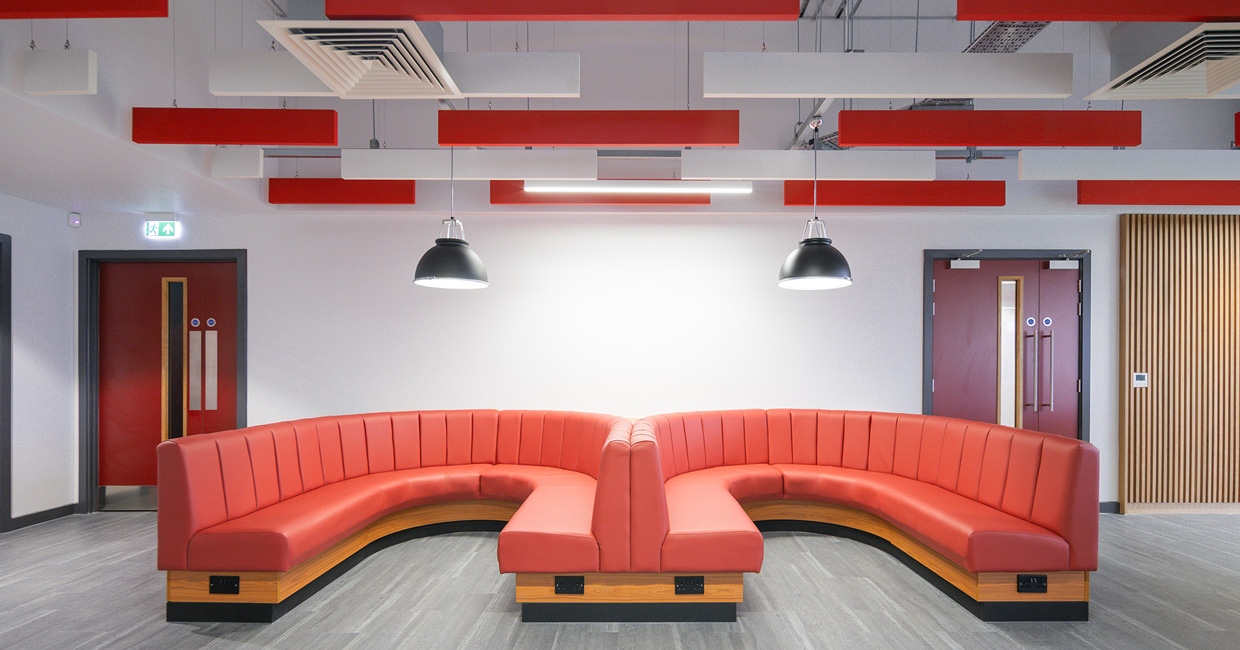
Based in Stoke-on-Trent, the family-run manufacturer designs and produces bespoke contract furniture and specialist joinery for projects across the commercial, education, hospitality and public sectors. Every project is underpinned by the same philosophy: deliver quality without compromise, work collaboratively with customers and continually invest in the people, processes and technology that support long-term success.
Experience as an advantage
While manufacturing capability is central to the business, one of LiDR’s greatest strengths lies in something that cannot simply be purchased – experience. Many members of the team have spent decades with the company, creating an exceptional level of manufacturing knowledge that influences every stage of a project. From interpreting complex specifications and selecting appropriate materials to solving technical challenges during production, that accumulated expertise provides customers with confidence that every detail has been carefully considered.
“We’ve got hundreds of years of manufacturing experience under this roof,” says Director Eleanor Owen. “Customers know they’re getting products built by people who genuinely understand what they’re doing.”
That depth of knowledge has become increasingly valuable as contract furniture projects have grown more sophisticated. Today’s clients expect far more than simply a manufacturer capable of producing drawings. They require practical advice, technical guidance and the confidence that specifications can be delivered efficiently without compromising the finished result.
Collaborative by design
For LiDR, this has naturally evolved into a more consultative way of working. The company regularly collaborates with architects, interior designers, contractors and end users to review specifications, recommend alternative materials where appropriate and identify manufacturing solutions that improve efficiency while maintaining design intent.
Often, these conversations begin with practical considerations. Materials may have been discontinued, minimum order quantities may no longer be commercially viable or imported products may introduce unnecessary complexity into the supply chain. In other cases, specifications may include premium materials where more practical alternatives could achieve the same aesthetic and performance while offering greater value.
Rather than simply manufacturing exactly what appears on a drawing, LiDR works with customers to ensure the final product is not only visually successful but also commercially and technically robust. “We want somebody to look at something they’ve paid £100 for and feel like they’ve got something worth £150,” Eleanor explains. “There’s no value in delivering a product that looks compromised because corners have been cut in the wrong areas.”
This practical approach extends to material selection. Wherever possible, LiDR favours UK-manufactured boards, laminates and fabrics, recognising the advantages they bring in terms of consistency, availability and supply-chain resilience. Shorter lead times, reduced transport requirements and closer relationships with suppliers all contribute to delivering projects more efficiently while supporting British manufacturing.
The company’s approach to sustainability follows a similarly pragmatic philosophy. Rather than treating environmental responsibility as a marketing exercise, LiDR has consistently invested in improvements that reduce waste, improve efficiency and create longterm operational benefits.
Investments in biomass heating, LED lighting, water-based finishing systems and electric vehicles all reflect this commitment, while future plans continue to explore further opportunities to improve environmental performance.
“We were doing these things before it was fashionable,” Eleanor says. “We did them because they were the right thing to do.”
Continuous improvement
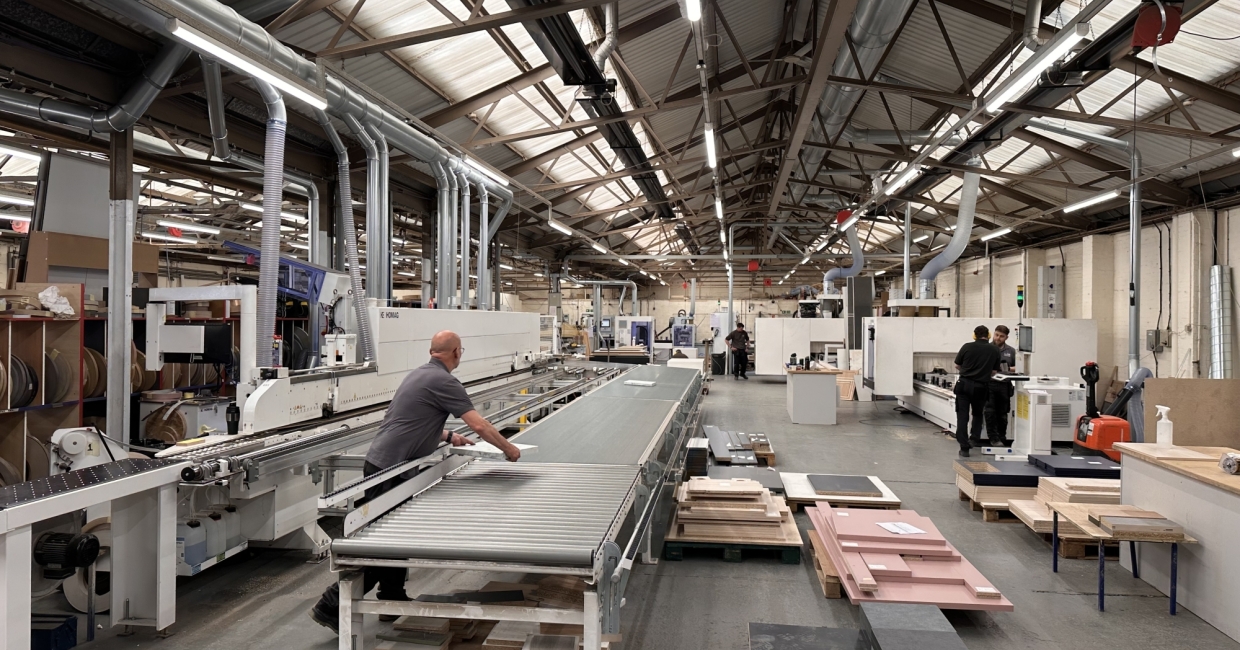
That long-term mindset can also be seen throughout the factory itself. Rather than relying on occasional large-scale investment programmes, LiDR has adopted a strategy of continual improvement, upgrading equipment and production systems as opportunities arise. Recent investment in automated board storage, improved extraction systems and enhanced production workflows has increased efficiency while creating a cleaner, more organised manufacturing environment.
These improvements may not always be immediately visible to customers, but they have a significant impact on product quality, consistency and lead times. Better workflow reduces unnecessary handling, automation improves accuracy and modern extraction systems contribute to both environmental performance and employee wellbeing.
For Eleanor, continuous investment is not simply about purchasing new machinery; it is about ensuring the business continues to evolve.
“If you carry on doing the things you did yesterday, eventually you start going backwards,” she says. “You’ve got to keep looking forward.”
Confidence in quality
That willingness to adapt has enabled LiDR to diversify as markets have changed. Over the years, the business has successfully expanded beyond its traditional customer base to support projects across multiple sectors, delivering bespoke furniture solutions for everything from educational facilities and commercial workplaces to hospitality venues and high-performance sporting environments.
This breadth of experience allows the company to bring fresh thinking to every project while retaining the flexibility that bespoke manufacturing demands. No two clients are identical, and no two projects are approached with a one-size-fits-all mentality.
Instead, each commission benefits from direct collaboration between experienced people who understand both the creative ambitions of designers and the practical realities of manufacturing.
Throughout every stage of the process, quality remains the defining principle. In an increasingly competitive marketplace, where value engineering and cost pressures continue to influence procurement decisions, LiDR remains committed to delivering products that offer genuine long-term value rather than simply the lowest initial price.
That philosophy shapes every investment decision, every material recommendation and every customer relationship.
“If somebody doesn’t want quality,” Eleanor says, “then we’re probably not the right fit for them.”
It is a straightforward approach, but one that has helped the business build longstanding partnerships with clients who value reliability, craftsmanship and honest technical advice.
As the contract furniture sector continues to evolve, LiDR remains focused on the principles that have defined the company throughout its history: experienced people, thoughtful investment, collaborative working and an unwavering commitment to quality.
By combining traditional manufacturing expertise with modern production capability, the company continues to demonstrate the enduring strengths of British manufacturing. For customers seeking a partner who can contribute as much to the thinking behind a project as to its manufacture, LiDR offers more than furniture alone – it offers experience, capability and the confidence that comes from working with people who understand how to deliver lasting value.