
Built on a broad market experience and its own manufacturing capability, LiDR Contract Furniture continues to evolve within a dynamically changing market. John Legg met with director Eleanor Owen to find out more.
LiDR Contract Furniture has spent decades adapting to changing markets, evolving specifications and increasing commercial pressure — without losing sight of the manufacturing principles that built the business in the first place. Based in Stoke-on-Trent, the family-run business supplies bespoke contract furniture and specialist joinery across commercial, education, hospitality and public sector environments, combining long-standing manufacturing experience with continued investment in production capability.
According to company director Eleanor Owen, one of LiDR’s greatest strengths remains the experience retained within the business itself. “Around 25% of our staff have been here more than 20 years,” she explains. “Our Production Director Darren Lowe joined us straight from school at 16 and he’s now been here 34 years. Around 50% of the workforce has more than 10 years’ service.”
That continuity, Eleanor believes, directly benefits customers through consistency, technical understanding and practical problem-solving. “We’ve got hundreds of years of manufacturing experience under this roof,” she says. “Customers know they’re getting products built by people who genuinely understand what they’re doing.” That experience is becoming increasingly valuable in a market where projects are more complex, lead times are shrinking and clients are under growing pressure to control costs. Eleanor says the past two years in particular have seen noticeable hesitation across multiple sectors, with customers delaying commitment until the final possible moment.
“There’s definitely more nervousness around committing to projects,” she says. “We’re producing more quotations than I can ever remember, but fewer of them immediately come to fruition because funding decisions are taking longer. Then, once approval finally comes through, everything suddenly becomes urgent.”
The result, she says, is a market where decision-making has become compressed, putting pressure on manufacturing lead times while increasing stress throughout the supply chain. Despite that, LiDR has remained disciplined in its approach to pricing and delivery. “We’ve always had a policy that if we can’t do something in a sustainable way, we won’t do it,” Eleanor says. “We’ll never buy work off anybody.”
Experience still matters
As projects become more design-led and procurement processes more layered, LiDR is increasingly finding itself acting as both manufacturer and advisor, particularly around specification and material selection. Eleanor believes there is a growing disconnect between some areas of design specification and the practical realities of manufacturing.
“We’ll often receive specifications where materials have been discontinued, are only available overseas or have huge minimum order quantities,” she explains. “At that point it comes back to us to manage those conversations.”
She also points to increasing confusion around technical differences between laminates, veneers and melamine-faced boards, with specification choices sometimes adding unnecessary cost without improving the finished result. “If we can see a better or more efficient way of achieving the same result, we’ll always suggest it,” she says. “We want somebody to look at something they’ve paid £100 for and feel like they’ve got something worth £150. There’s no value in delivering a product that looks compromised because corners have been cut in the wrong areas.”
Reliability and resilience
That consultative approach extends into LiDR’s preference for UK-manufactured materials wherever possible. Eleanor believes British-made boards and fabrics continue to offer advantages in reliability, supply-chain resilience and environmental impact, particularly at a time when imported products can introduce delays, added transport costs and procurement complications. “There are real advantages in using UK-made materials,” she says. “Supply chains are more reliable, lead times are better and you’re reducing unnecessary transport and environmental impact. Sometimes imported materials add cost and complexity without actually improving the finished product.”
That long-term mindset is also reflected in the company’s continued investment programme, which has seen LiDR steadily upgrade machinery, workflow systems and factory infrastructure rather than relying on occasional large-scale changes. “We’re always reinvesting bit by bit,” Eleanor says. “We’re not letting things get too old. We’re always looking at how we can improve efficiency, quality and capability.”
Investment is ongoing
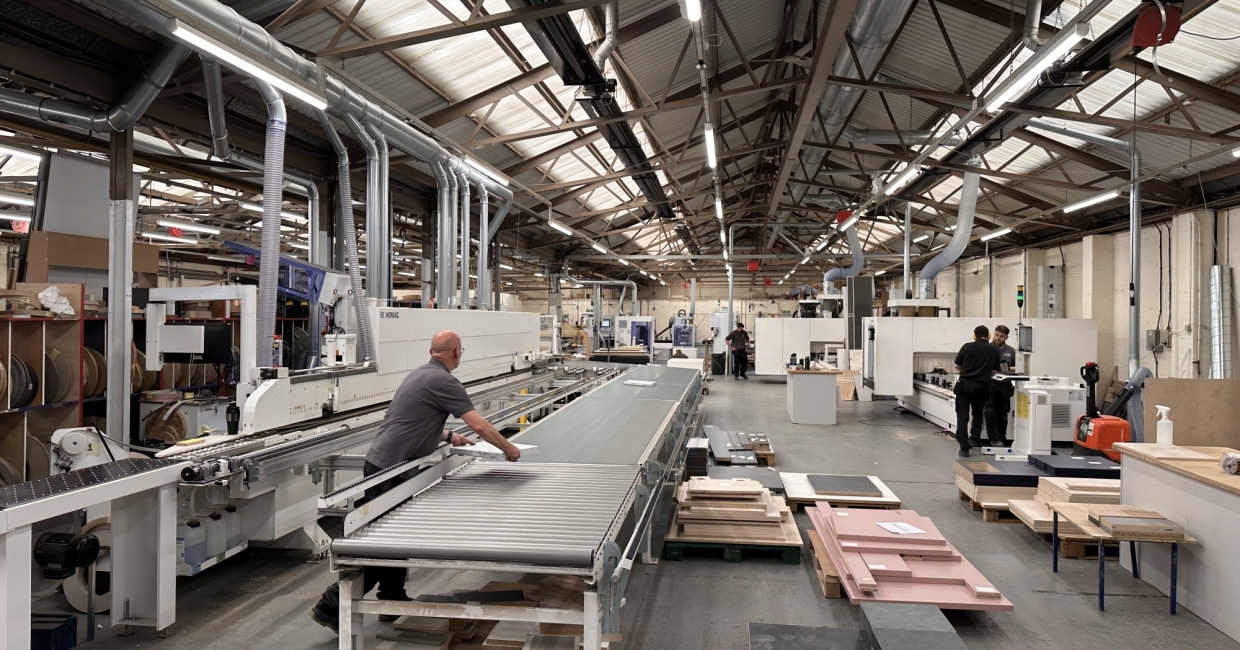
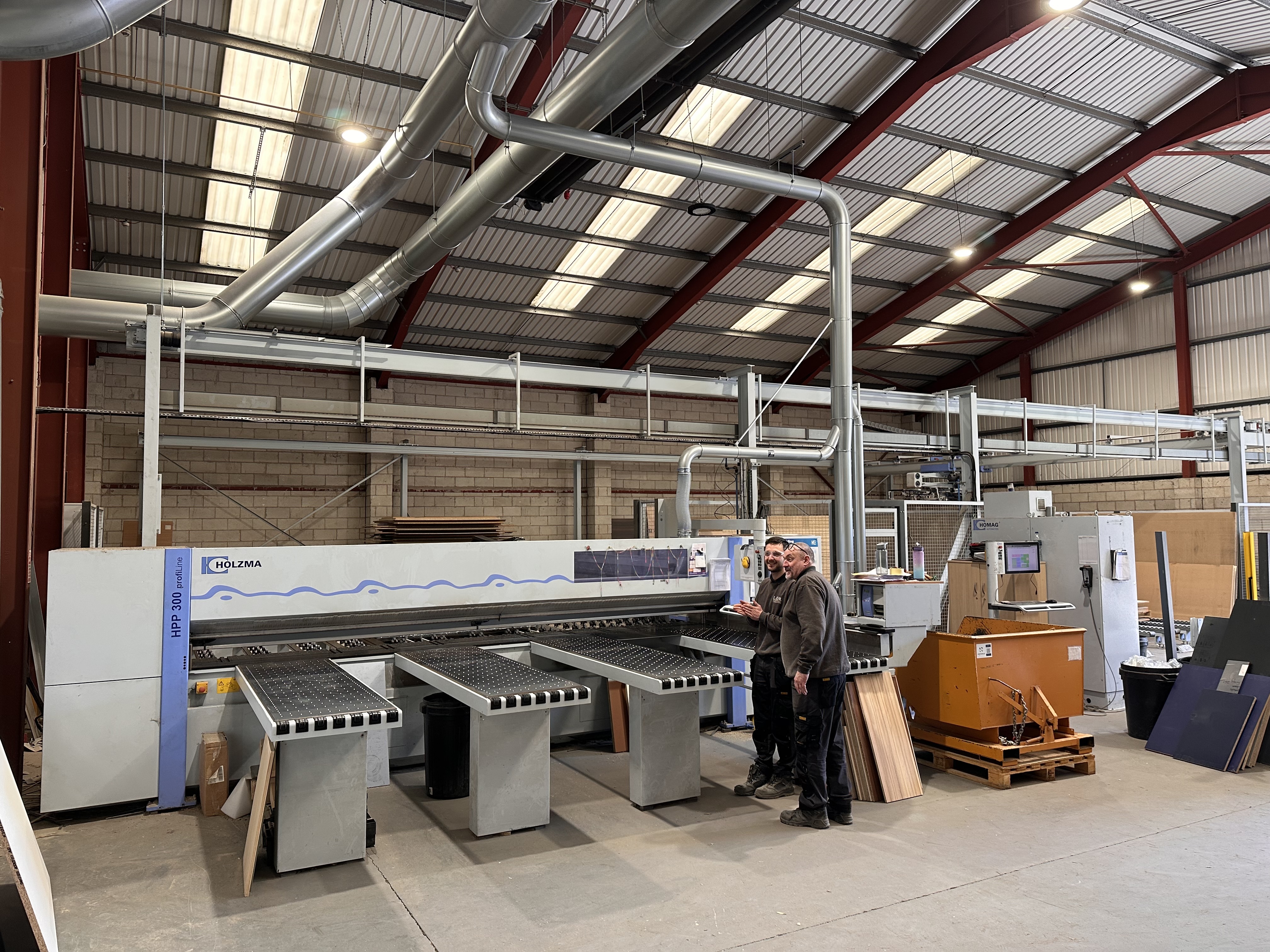
Recent investment across the factory includes a major new extraction system, automated board storage and ongoing improvements to production flow. The extraction installation replaces an older system that had been expanded incrementally over many years, eventually reducing efficiency due to increasingly complex pipe runs and connections.
“The extraction system we had before had been added to over nearly 20 years,” Eleanor explains. “There were too many joints and bends in the pipework, so efficiency had started to drop off. The new system improves air quality, sustainability and overall factory performance.”
The company’s automated board storage system has also transformed handling efficiency, reducing unnecessary movement while allowing materials to move more cleanly through production. “The computer remembers where everything is,” Eleanor says. “Materials can be retrieved automatically and panels are labelled as they move through production, so everything flows much more efficiently through the factory.”
Walking around the facility, the emphasis on organisation and capability is immediately apparent. Production remains active throughout the building, with materials progressing cleanly through each stage of manufacture and little wasted handling or unnecessary movement.
For a medium-sized operation, the level of investment and operational structure stands out, particularly within a sector where many businesses have delayed spending due to wider economic pressures. Eleanor sees that continued investment as essential to remaining competitive.
“If you carry on doing the things you did yesterday, eventually you start going backwards,” she says. “You’ve got to keep looking forward.” That willingness to evolve has already helped LiDR navigate major changes within the industries it serves. In the early 2000s, much of the company’s work centred around retail display furniture for Stoke-on-Trent’s ceramics industry alongside educational catalogue furniture. Both markets have since changed dramatically, with large amounts of production moving overseas. “If we’d stayed tied completely to those sectors, we might not still be here,” Eleanor says. “Flexibility is one of our key strengths.”
Quality remains central
That flexibility now allows the business to work across a broad range of sectors and project types, although Eleanor acknowledges that breadth can create its own challenges. “You can end up quoting for everything and targeting nothing if you’re not careful,” she says. “At some point you have to decide where you want to focus your efforts and where you can genuinely add value.”
Recent work for Stoke City FC’s state-of-the-art training facility further demonstrates LiDR’s ability to deliver bespoke furniture solutions into demanding, high-performance environments. The project required close coordination, bespoke development and fast-moving delivery schedules – areas where Eleanor believes local manufacturing capability and direct collaboration continue to offer significant advantages.
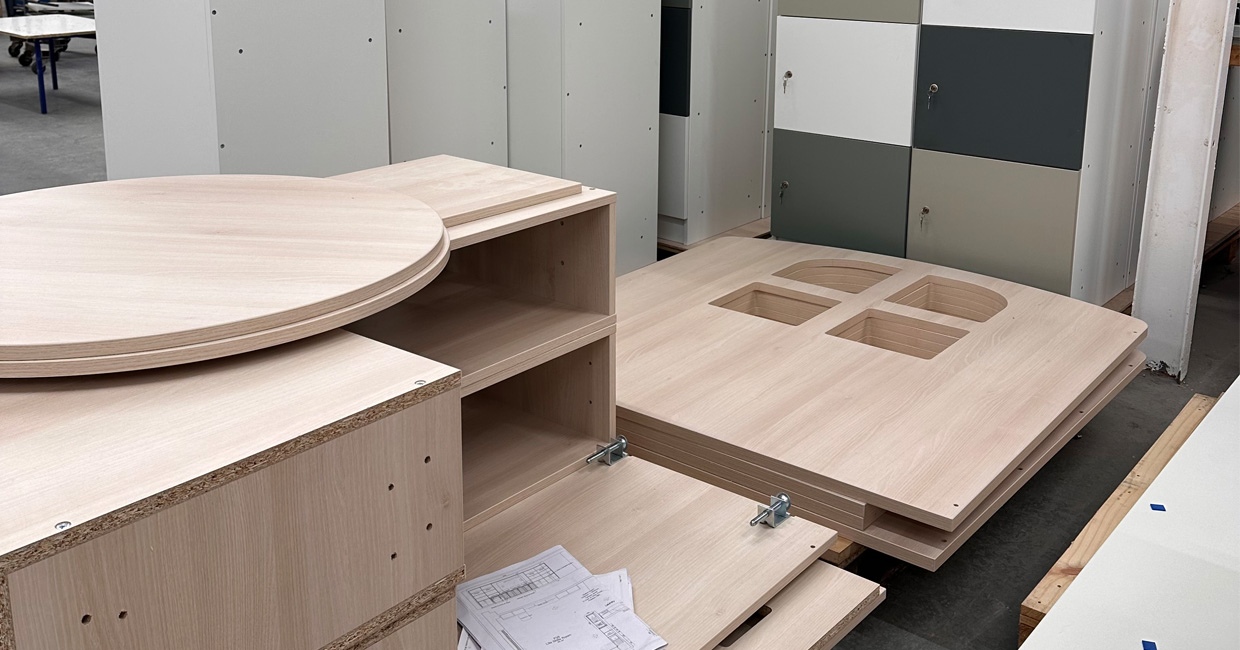
The company’s willingness to evolve is balanced by a strong reluctance to compromise on standards, even within an increasingly cost-driven marketplace. “Quality has to stay at the centre of what we do,” Eleanor says. “If somebody doesn’t want quality, then we’re probably not the right fit for them.”
That same pragmatism shapes LiDR’s approach to sustainability and environmental responsibility. Over recent years the company has invested in biomass heating, LED lighting, water-based finishing systems, improved extraction and electric vehicles, with solar panels likely to follow in future. However, Eleanor is candid about the growing administrative burden surrounding environmental reporting and compliance, particularly for SMEs supplying into larger contractor and framework structures. “We were doing these things before it was fashionable,” she says. “We did them because they were the right thing to do.”
Operational challenges
As more organisations require detailed KPI reporting, carbon reduction documentation and social value assessments, she believes the resource implications are becoming increasingly significant. “For businesses our size, every additional reporting requirement takes time and resource,” she says. “At some point something has got to give. Either the industry accepts that these requirements increase costs, or the process becomes more practical.”
Alongside operational challenges, Eleanor says one of the biggest responsibilities as a managing director is making the right long-term decisions around staffing and growth. “With around 31 people here, every appointment matters,” she says. “You’re constantly weighing up where you want the business to go, where you need support and whether you’re making the right investment for the future.”
Those decisions, she says, carry responsibility not only commercially but personally. “You want to do the right thing by your staff and by the legacy of the business. That weight of responsibility means you think carefully about the decisions you make.”
Despite continued pressure across the sector, Eleanor remains optimistic about the future of UK manufacturing businesses that continue to invest, adapt and maintain high standards –qualities that have shaped LiDR throughout its development and continue to define the business moving forward.
As LiDR continues to evolve, the business remains firmly rooted in the values that have shaped it over decades – manufacturing knowledge, measured investment, adaptability and an uncompromising approach to quality. Under Eleanor Owen’s leadership, the company continues to combine modern production capability with the experience and practical understanding that only long-standing British manufacturing businesses can offer. In an increasingly competitive global marketplace, LiDR’s confidence in its people, systems and standards reflects not only the resilience of the business itself, but also the enduring strength of premium UK manufacturing when it is backed by skill, commitment and a clear long-term vision.
01782 413600