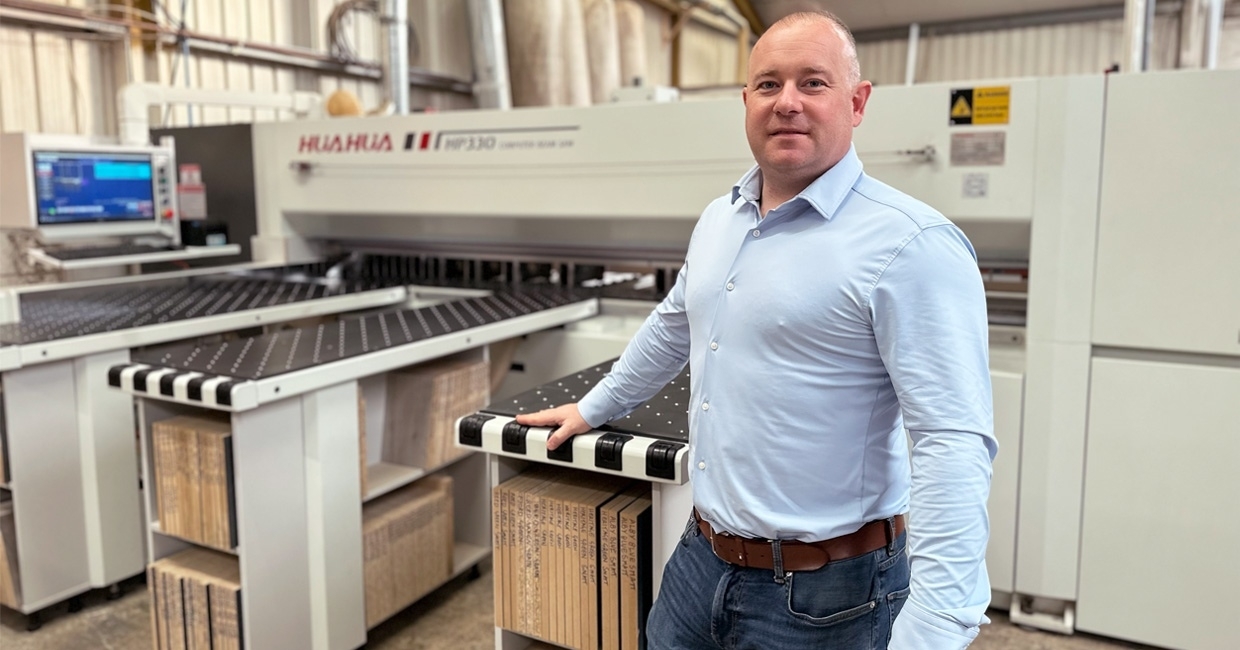
In panel processing, machinery is often evaluated on specification. Speeds, capacities and automation features dominate discussion, with comparisons frequently drawn on headline figures alone. In practice, however, those figures rarely determine whether an investment succeeds. For Panel Production Machinery, the starting point sits elsewhere.
The business is defined by Managing Director Symon Eyre’s background as a hands-on engineer. Before moving into machinery supply, his experience was rooted in manufacturing environments where maintenance, troubleshooting and production continuity were part of daily operations.
That background continues to shape how projects are approached. Rather than presenting equipment first, conversations begin with workflow — how material moves, where time is lost and what happens when production stops. “Customers rely on that machine for their livelihoods,” Symon says. “It has to run. That’s the first rule.”
It is a perspective formed through practical experience rather than theory. Time spent diagnosing faults and supporting production has led to a consistent emphasis on reliability, serviceability and long-term performance.
Listening before specifying
This leads to a clear principle: specification follows understanding. Customers are not taken through a catalogue of options, but through a structured discussion about their operation. What level of throughput is genuinely required? Where are the constraints? How quickly would an issue need to be resolved?
In many cases, particularly among small to medium-sized manufacturers, downtime has an immediate impact. Without redundant capacity, even minor issues can disrupt production significantly.
“In this industry, you don’t get a second chance if something stops,” Symon explains. “You have to understand that before you start talking about machinery.” As a result, solutions are defined in context. Over-specifying is avoided as carefully as underinvestment, with decisions based on how equipment will perform in daily use rather than how it appears on paper.
Engineering as the differentiator
That thinking carries through into the machinery itself. Construction, electrical integrity and long-term serviceability are prioritised over superficial features or marketing claims.
Having worked extensively on equipment in the field, Symon is aware that design decisions made at the point of manufacture directly influence reliability and ease of maintenance over time.
“You’re not buying a machine from us; you’re buying service,” he says. This reflects a broader position within the market. While many manufacturers offer similar levels of specification, differences often emerge in longterm support. Delays in response, layered communication and limited access to engineering knowledge can affect performance as much as the equipment itself.
A systems view of production
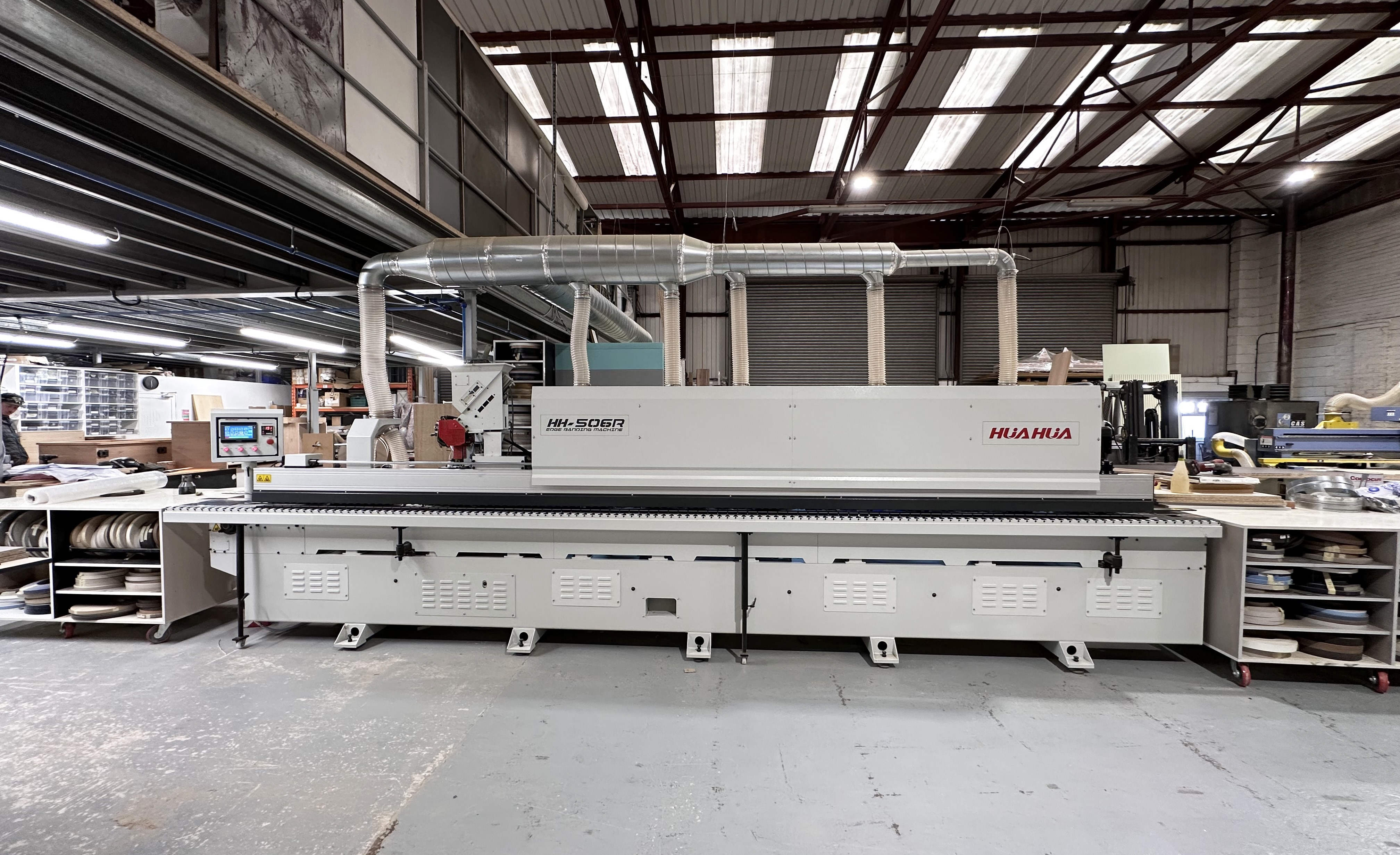
Panel processing is not defined by a single machine, and PPM’s approach reflects that. Beam saws, CNC processing, drilling and edgebanding are considered as part of a wider system, where performance depends on how effectively each stage aligns.
Improvements in one area are evaluated in relation to the next. Increasing cutting capacity, for example, must be balanced against downstream processes to avoid simply shifting bottlenecks elsewhere. “It’s about getting the balance right,” Symon says. “If the whole process works together, everything becomes more consistent.”
This systems-based perspective allows customers to invest incrementally or undertake broader upgrades, with confidence that each stage supports a coherent production strategy.
Support that underpins performance
For PPM, installation marks the beginning rather than the end of the process. Commissioning, operator training and ongoing support are treated as integral to ensuring machinery delivers consistently.
Symon’s service background remains central here. Having spent years resolving faults and maintaining equipment, he is clear that support quality is often the defining factor in long-term performance.
Machines with similar specifications can behave very differently over time depending on how they are supported. Access to experienced engineers, responsive service and effective preventative maintenance all contribute to reliability.
“There’s a gap in service,” he says. “And that’s where we see the opportunity.” Backed by a network of engineers, the business focuses on providing practical support aligned with the realities of production, particularly for companies where downtime cannot be absorbed.
Built for long-term performance
While developments in automation and CNC technology continue to shape the sector, PPM’s approach remains pragmatic. Technology is adopted where it improves consistency, repeatability and ease of use, rather than for its own sake.
Across installations, the outcome is typically measured not only in output, but in predictability. Throughput becomes more stable, accuracy remains consistent and confidence in both machinery and support increases.
The objective is not short-term gain, but long-term performance. For Symon, that distinction is central. Machines can be specified, installed and commissioned, but lasting value depends on understanding how they will be used — and supporting them throughout their lifecycle.
It starts with listening – and it is sustained through engineering.