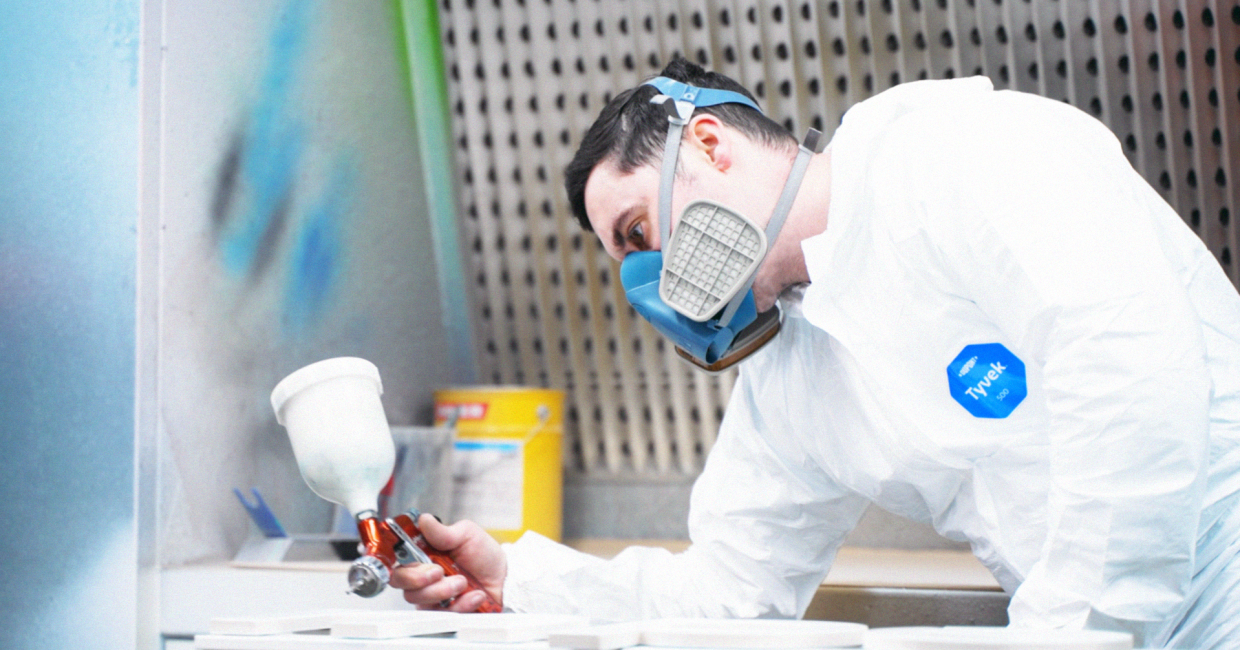
As Elmbridge celebrates 50 years, John Legg meets the people behind the family-owned finishing specialist to explore its technical evolution, growth ambitions and plans for the decades ahead.
Getting to know Elmbridge UK from the inside began with a visit to its Gloucestershire headquarters and a conversation with head of marketing, Andy Hearn. A subsequent catch-up with managing director Barrie Freeman and sales director Angus Freeman at the recent Professional Woodworking Expo provided an opportunity to continue that conversation – and hear directly from the brothers helping steer the family business into its next phase.
It is the kind of encounter that trade events are particularly good at facilitating. Away from formal meetings and day-to-day pressures, a few minutes on an exhibition stand can offer a different perspective on a business – particularly when the people involved are those responsible for deciding where it goes next.
And for Elmbridge, there is plenty to talk about. Still family owned after five decades, the company has evolved significantly from its original roots, growing from a regional supplier into a multifaceted technical partner serving the UK wood coatings and industrial finishing sectors. Its 50th anniversary provides a natural opportunity to reflect on that journey, but conversations with the team make it equally clear that attention is firmly focused on what comes next.
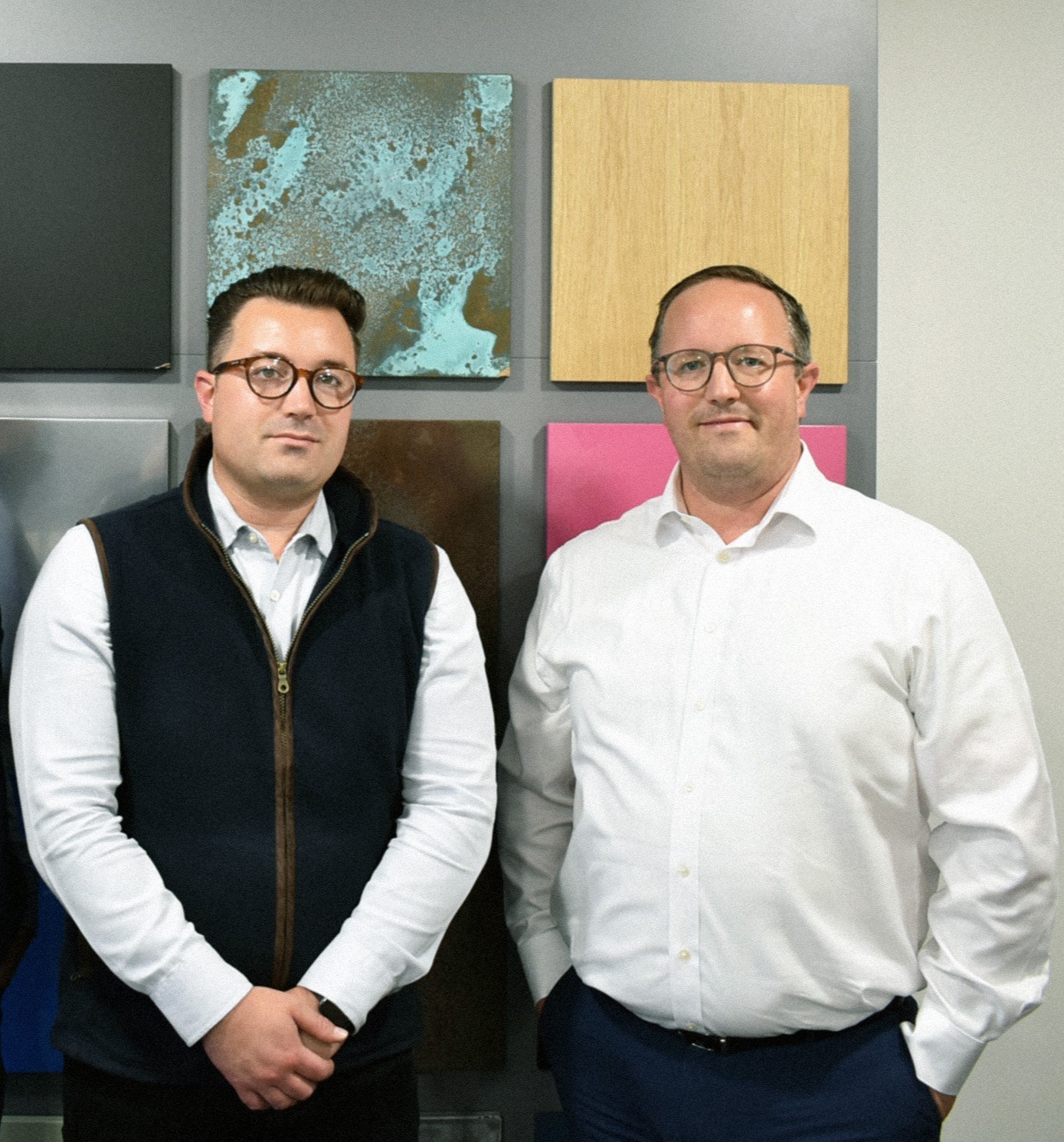
Angus and Barrie Freeman
From a garage to a 50-strong business
The family roots remain remarkably close to the present-day company.
Elmbridge was founded by Barrie and Angus Freeman’s grandfather, who started the business from his garage. Now in his mid-90s, he remains in touch with its progress, receiving updates from the family on the company he established half a century ago.
What he sees today is a substantially different operation.
“The business has changed totally,” says Barrie. “It’s only really in the last 12 years that we’ve gone into the wood coatings market. We were seen as the new boys in the market.”
Elmbridge may have arrived relatively late to that particular sector, but its intentions were serious. Investment in products, people, equipment and technical capability has helped establish the company within wood finishing while creating an offering extending considerably beyond coatings supply alone.
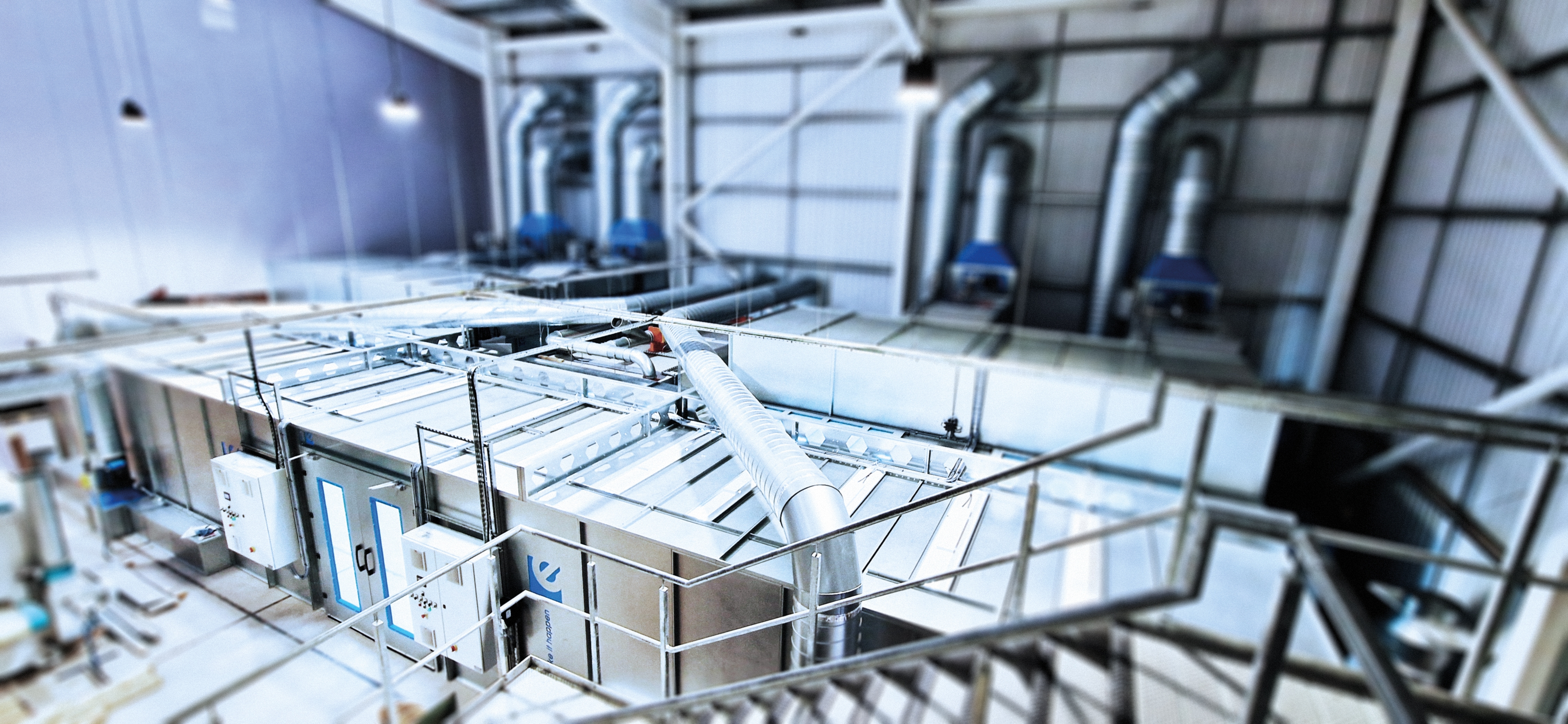
Today, alongside paints and lacquers, Elmbridge provides associated consumables, spray equipment, technical support, extraction systems and finishing process expertise. At the capital equipment end, that can extend to spray machines, spray booths and complete turnkey installations incorporating spraying and drying rooms, ovens, automation and manual handling systems.
The company now employs just over 50 people – an appropriately neat coincidence as it celebrates 50 years in business.

Head of marketing, Andrew Hearn
“That flexibility allows us to grow with customers over time and become a much more integrated partner in their process.”
One source, rather than many
At the heart of Elmbridge’s positioning is what the business describes as its ‘single source’ approach: supporting customers across multiple stages of the finishing process rather than simply supplying an individual coating or piece of equipment.
“That flexibility allows us to grow with customers over time and become a much more integrated partner in their process. We can support customers with coatings, equipment, consumables, extraction and technical guidance together,” says Andy.
For Barrie, that end-to-end capability is also fundamental to where the company expects future growth to come from.
“A lot of our customers trust us right through the sales process,” he says. “We have a lot of customers come to us who are starting up spraying.”
Some may previously have outsourced their finishing operation and be looking to bring it in-house. For Elmbridge, those businesses represent something of a sweet spot because its breadth of expertise means the team can help establish the process from end to end.
It is an approach designed to simplify what might otherwise involve a complex combination of suppliers, technologies and competing technical considerations. For manufacturers facing continuing pressure around productivity, labour, quality and lead times, having one point of contact capable of understanding the entire finishing process has obvious attractions.
That broader strategy has also been reflected through recent acquisitions. Earlier this year Elmbridge announced the acquisition of Minden Systems Ltd, a specialist in extraction and filtration systems, following the addition of dust extraction specialist Wyndham to the wider business. Together, the acquisitions reinforce Elmbridge’s ambition to strengthen its technical capabilities and offer customers increasingly integrated finishing solutions.
“We’ve grown organically for many years,” says Andy. “A lot of opportunities have come from relationships, technical expertise and word of mouth. But over the last few years there’s been a real ambition to build on that foundation and grow the business in a more structured way.”
That structure is increasingly visible through investment in CRM systems, business development activity, dedicated marketing support and a more formal long-term growth strategy.
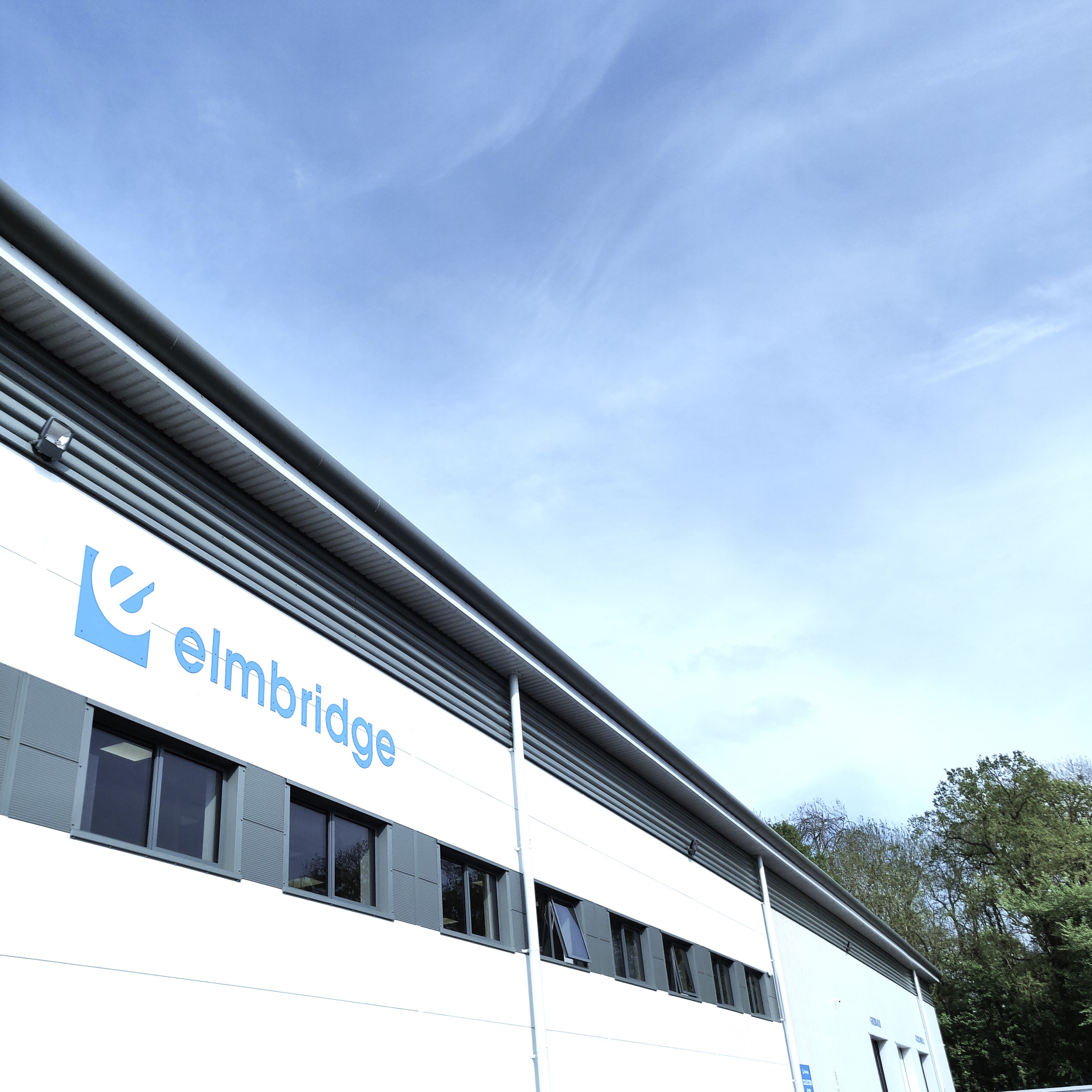
The impressive Elmbridge HQ in Gloucester
Growth when the market gets tougher
That growth will not necessarily be delivered by a buoyant market doing the work for Elmbridge.
Angus is candid about current conditions. “It’s definitely slower out there in the marketplace,” he says. “It’s been a quiet year. We’ve never really been a company that stands still. We’ve always looked for growth year on year.”
The end of last year and the current year have, he acknowledges, made that growth harder to achieve. The response has been to increase rather than reduce the emphasis on business development. “You have to drive it. There’s natural attrition in all businesses, so you need to press on.”
Customer retention remains important, but new-business visits and the wider business development function have received additional focus.
That determination to keep moving appears to run consistently through the company. Elmbridge sees further market share to win, but also opportunities created as manufacturers search for more efficient, sustainable and technically integrated finishing solutions.
Rather than expanding indiscriminately into unfamiliar sectors, however, the company remains focused on deepening its position within markets it understands.
Joinery, fire doors and interior fit-out manufacturing are important areas, particularly businesses producing bespoke joinery for commercial and high-end residential projects. External joinery, including window and door manufacture, is another established specialism, alongside kitchen manufacturers ranging from bespoke producers to those manufacturing defined ranges.
Water-based technology and the wider process
One area in which Elmbridge believes it has established a particularly strong technical position is water-based coatings. “We’re very strong in the water-based market,” says Angus.
Crucially, however, the proposition does not end with supplying the coating. Because Elmbridge also works with application equipment, spray booth facilities and extraction, its technical involvement can extend throughout the process.
That means understanding not simply which coating to specify, but how it will be applied, how it dries and cures, the equipment required and how each stage can be configured to create an efficient production process.
This whole-process knowledge becomes increasingly valuable as manufacturers migrate towards water-based technology while attempting to maintain – or improve – productivity and finish quality.
Sustainability is consequently another area in which Elmbridge sees scope for further development, both through products already within its portfolio and new systems capable of satisfying increasingly demanding specifications.
For higher-tier joinery businesses in particular, environmental credentials are becoming more integral to product selection, while architects and specifiers are placing greater scrutiny on the materials entering a project.
Alongside that trend has come rapidly increasing focus on fire performance.
Angus points to demand surrounding fire doors and fire-retardant coating systems, but also the complexity involved in bringing appropriate solutions to market. The coating itself is only part of the equation: clarity, durability, application methods, film thicknesses and independent testing can all form part of a complete approved system.
It is an environment in which product and process expertise are becoming increasingly difficult to separate.
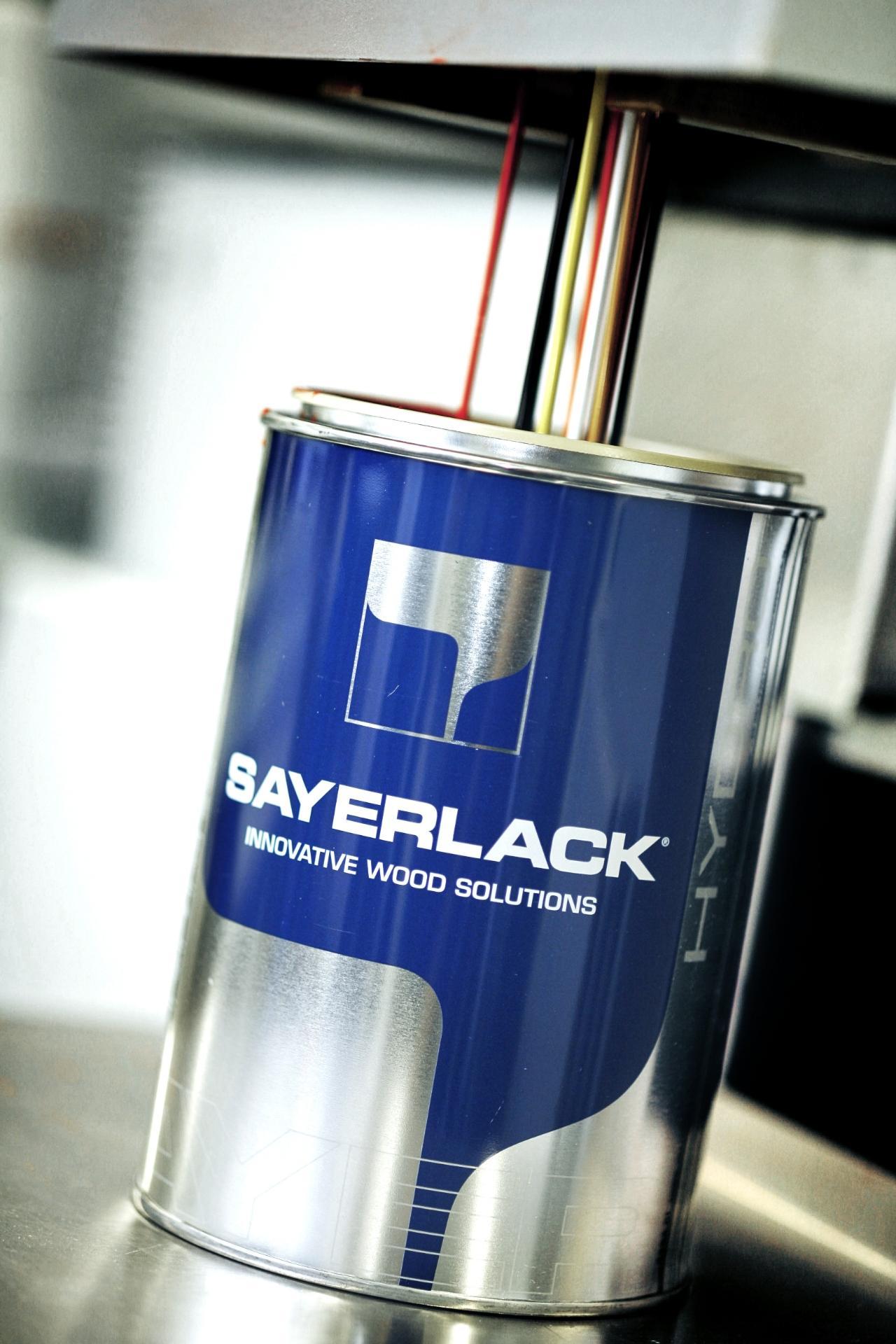
Elmbridge has a wide range of stocked finishing products plus mixing facilities for bespoke finishes
“You have to drive it. There’s natural attrition in all businesses, so you need to press on.”
Putting R&D on the front foot
That helps explain another important area of investment: research and development.
Elmbridge has been adding dedicated resource to its R&D capability, with the intention of accelerating both product and process development and working more closely with manufacturing partners.
“We’ve been investing in R&D quite a bit recently,” says Barrie. “We’ve got a dedicated person full-time on R&D now.”
The objective is to identify new and innovative products early, rather than wait until technologies have already become established elsewhere in the marketplace.
“We want to come to the marketplace on the front foot rather than trying to catch up,” he says.
Process development forms the other side of that equation. A new coating may offer advantages in its own right, but Elmbridge is equally interested in how it can be applied differently or incorporated within a more effective production method to deliver measurable improvements in speed and efficiency.
Angus sees the increased R&D resource as an opportunity to deepen engagement with key manufacturers and bring fresh ideas back into the business.
Elmbridge also has ambitions for its own-brand coatings, seeking to develop its position in wood finishing while drawing upon experience of establishing proprietary products elsewhere within the company.
Combined with exclusive UK relationships with several coatings suppliers and their own ongoing product development programmes, the aim is to maintain access to emerging technology while developing an increasingly distinctive proposition of its own. “We want to stay ahead of the game,” says Angus. “You’ve got to keep moving.”
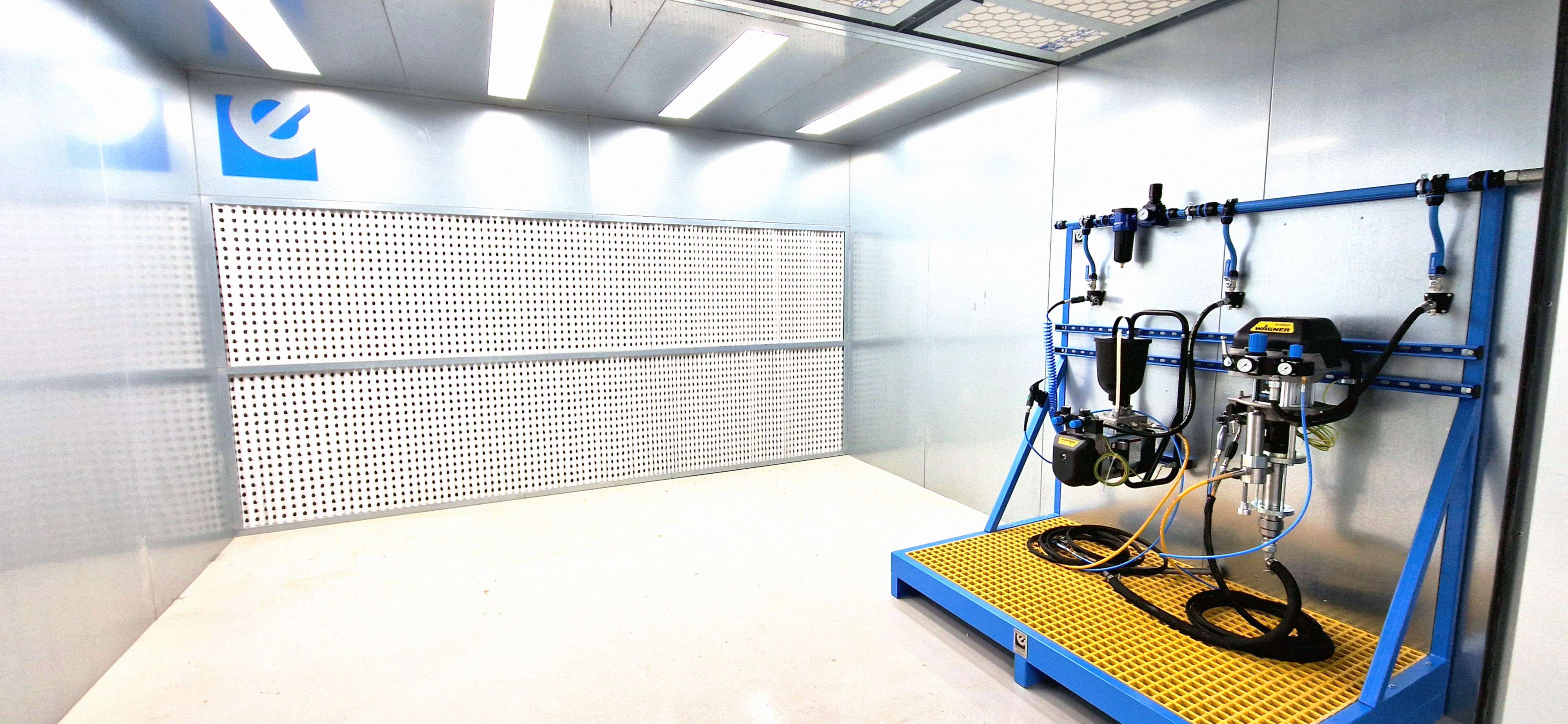
Elmbridge has invested in extensive operational demo spaces
Bringing customers and technology together
That emphasis on practical knowledge also shapes Elmbridge’s programme of in-house technical events and open days.
Its recent event at the company’s Gloucester headquarters focused on intumescent coatings and advanced spray equipment solutions, bringing together customers, technical specialists and supplier partners including Jotun for live demonstrations and practical discussion.
Rather than relying on a conventional presentation-led format, Elmbridge puts considerable emphasis on hands-on demonstrations, technical problem solving and direct access to both its own specialists and manufacturing partners.
Visitors can see products and systems operating in real-world conditions, speak directly with technicians and application specialists and compare approaches to finishing technology.
“People are busy, so we try to make the events practical and flexible,” says Andy. “Visitors can come in for a couple of demonstrations, have conversations with the technical people they want to speak to, and leave with ideas they can immediately apply.”
That exchange of knowledge also strengthens relationships across the company’s partner network, bringing suppliers, technicians and end users together in an informal technical environment.
“Even experienced sprayers and finishers will often come away having learned something new,” Andy adds. “The technology keeps moving forward – whether that’s application equipment, coating systems or process efficiency – and staying current has real operational value.”
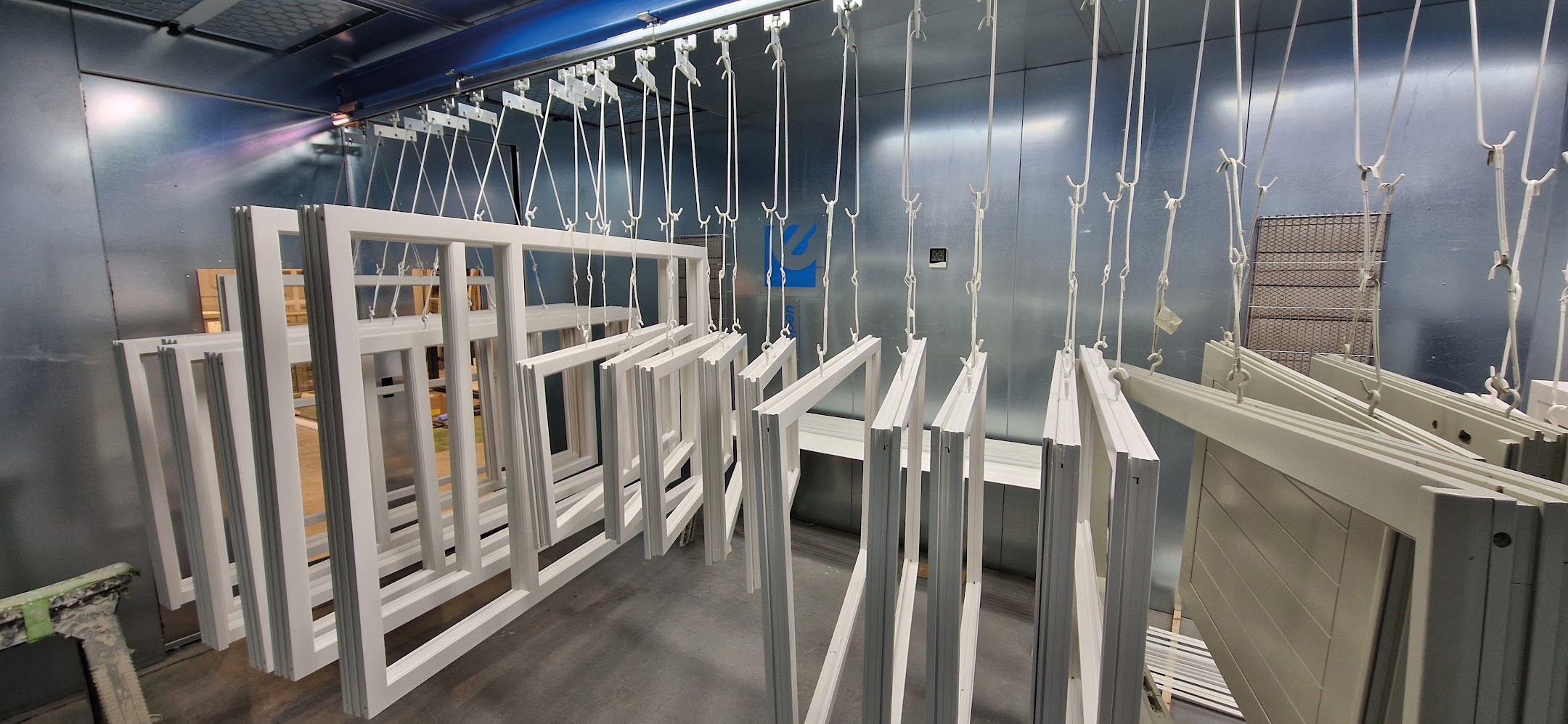
People, culture and making it happen
For all the emphasis on technology, products and processes, Barrie’s response when asked what he most enjoys about his own role is revealingly straightforward.
“Developing people,” he says. “Building a team.”
That team has grown alongside the company, and the continued development of its people sits alongside investment in systems, products and acquisitions as a central component of Elmbridge’s plans.
Its core values – including ‘Make It Happen’, ‘Quick Learners’, ‘Team Players’ and ‘Conscientious’ – are intended to reflect a hands-on culture of responsiveness, adaptability and practical problem solving.
‘Make It Happen’ has particular resonance. “It’s playing on words a bit because all our customers make things and we make it happen for them,” says Barrie.
Behind the phrase sits a fairly concise description of how Elmbridge sees its role: reducing complexity, solving production problems and taking responsibility for helping customers make finishing processes work.
“In the last five years we’ve doubled in size. And we’re looking to triple in the next 10 years.”
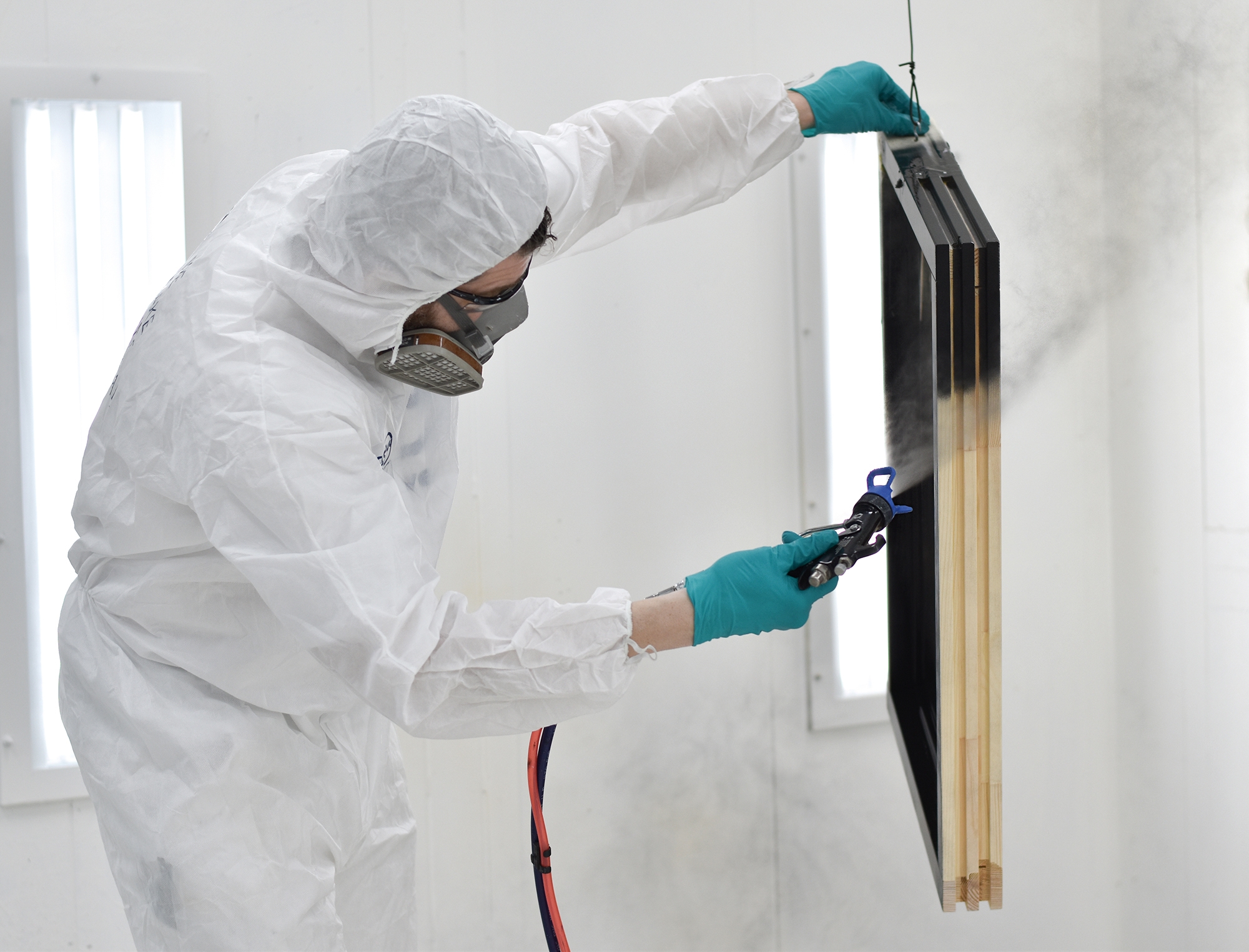
The next ten years
Reaching 50 years inevitably invites questions about longevity, but there is little sense from either brother that Elmbridge intends to spend too long admiring the milestone.
The business continues to look for new technologies and products within the industries it serves, while acquisitions remain part of the strategic picture where suitable opportunities can strengthen the wider proposition.
Its wood and metal coatings operations also provide two substantial areas of expertise within the wider company. While their sales and technical teams remain distinct because of the different knowledge required, operational disciplines such as quality control and dispatch can work in parallel across the business.
Most strikingly, Barrie puts a clear target against its longer-term ambition. “In the last five years we’ve doubled in size. And we’re looking to triple in the next 10 years.”
That is an unusually unequivocal statement of intent for a family business entering its sixth decade.
The route towards it will not depend on one initiative alone. Increased market share, continued investment in people and processes, R&D, new technologies, development of proprietary products and further acquisitions where appropriate all have a part to play.
But there is a useful consistency between what was visible during the original visit to Elmbridge’s headquarters and the subsequent conversations with Barrie and Angus on the stand at Professional Woodworking Expo.
This is a company proud of where it came from, but seemingly much more interested in where it can go.
Fifty years after Elmbridge began life in the Freeman family garage, the business has grown into something its founder could scarcely have envisaged. Yet perhaps the more interesting part of the story is that the current generation clearly believes there is considerably more still to build.
“Fifty years have given Elmbridge its heritage. With a new generation at the helm and an ambition to triple the business over the decade ahead, the next chapter could prove its most significant yet.”