
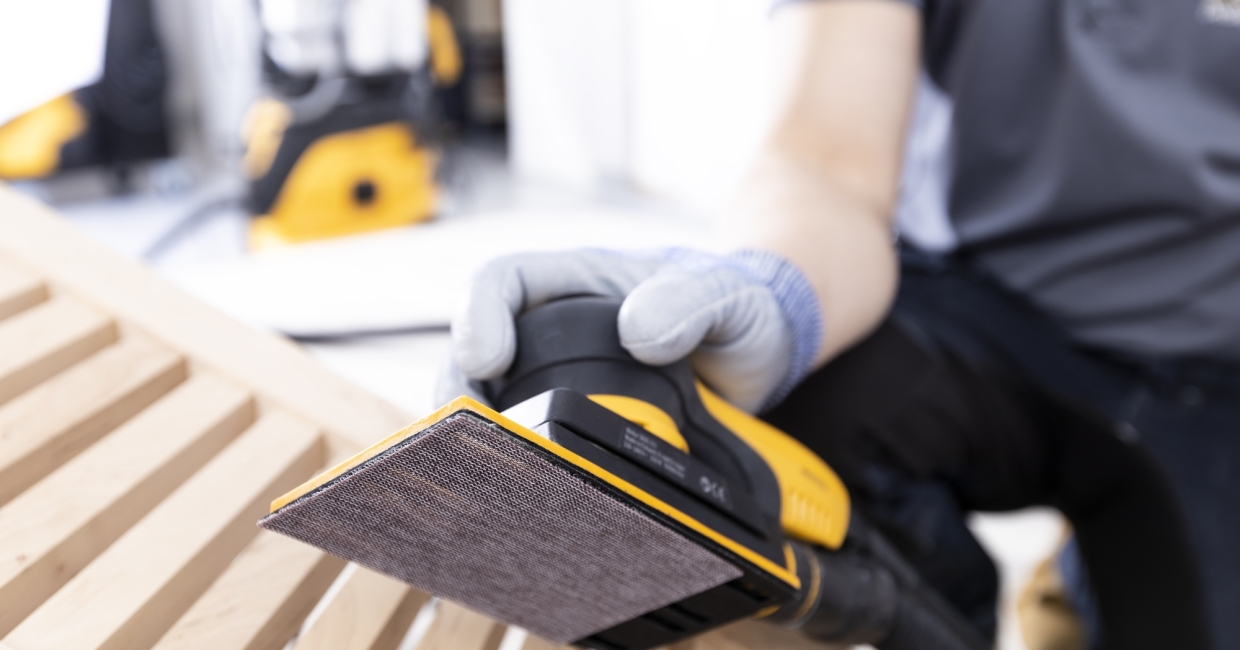
For years, dust on floors, in the air and across work surfaces was accepted as a normal sight in workshops. Laboratory testing highlights the scale of the issue: without effective dust extraction, more than 200g of dust becomes airborne for every kilogram of material sanded, while almost 800g settles on surrounding surfaces. The dust produced during sanding affects far more than workshop cleanliness. It poses significant health and fire risks, contaminates finished products, increases cleaning and maintenance time, and ultimately reduces productivity.
As a result, businesses of all sizes are carrying out their due diligence and investing in dust-free sanding solutions. While this requires an initial capital outlay, Mirka’s team of technical experts is seeing that businesses increasingly understand it as a long-term investment rather than a short-term expense.
A dust-free working environment helps ensure the workshop is not covered in dust at the end of each day, while also delivering benefits that extend well beyond a cleaner site. It enables multiple stages of the production process to take place in the same area without dust contaminating finished surfaces and potentially causing costly rework. This supports smoother workflows, higher productivity and increased efficiency, all of which are essential for manufacturers looking to remain competitive.
Mirka is also seeing businesses reap the financial benefits of going dust-free. By reducing dust contamination, companies can minimise costly rework, cut material waste and improve the quality of the products they produce. These savings help keep production costs under control, allowing businesses to market their products at competitive prices while also creating opportunities to reinvest in training, new tools or expanding the workshop capabilities.
For manufacturers, every stage of the production process depends on precision, efficiency and consistent quality. Dust-free sanding supports all three by creating a cleaner working environment, protecting finished surfaces from contamination and enabling smoother workflows. This is why it is important for businesses to keep dust-free sanding front of mind, both now and in the future.