
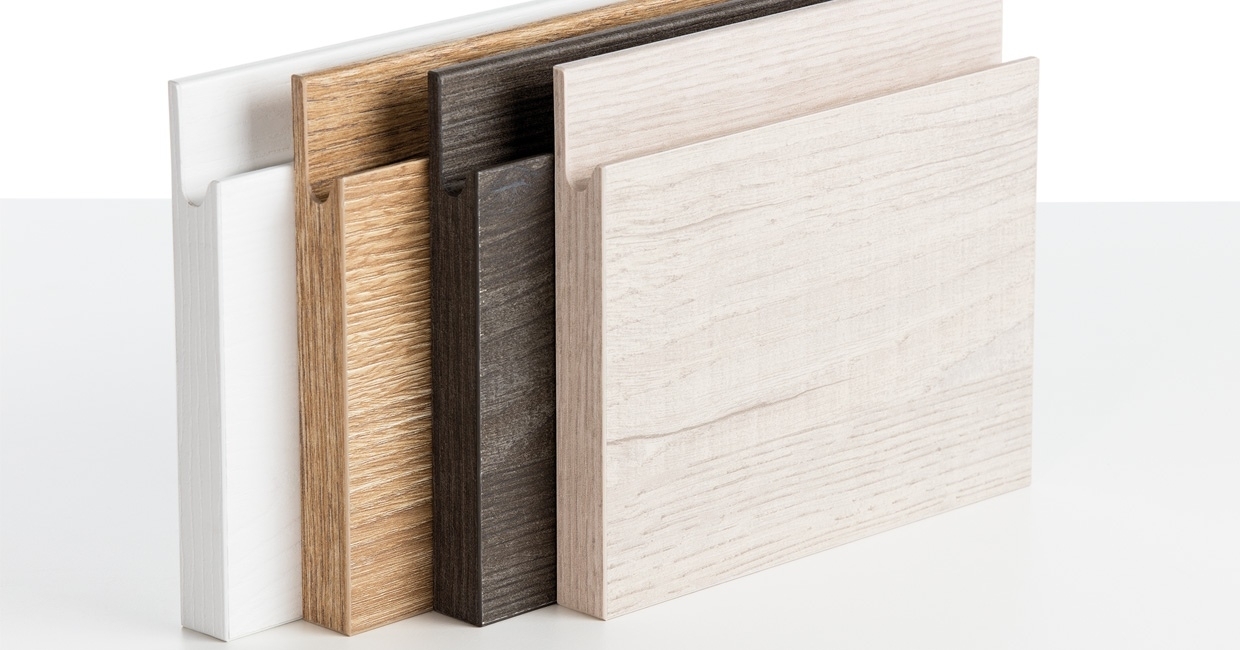
Edge bonding is a key process in modern furniture manufacturing, particularly in the kitchen and bathroom sector. To give coated panel materials their final finish, the narrow edges on visible sides are fitted with decorative edging made of plastic, wood or aluminium. In addition to protecting the panel substrate, the objective is to achieve a high-quality appearance that gives the end customer the impression of a furniture component made “from a single mould”.
Special attention is paid to the edge joint, which represents one of the most sensitive areas of a furniture component. It must be executed as invisibly and as tightly as possible, both visually and physically. In kitchens and bathrooms especially, furniture is regularly exposed to moisture, water vapour and temperature fluctuations. If the edge bond is not applied correctly, moisture can penetrate the joint over time, causing the core material to swell and ultimately leading to structural damage or premature failure of the furniture piece.
A wide range of materials is used in edgebanding applications. Edging materials are typically manufactured from ABS plastic, aluminium or wood, while the panels to be edged are used for furniture fronts, side panels and, in some cases, rear panels. Panel surfaces are generally already laminated prior to edge bonding.
To meet the highest aesthetic and functional demands, the optical zero joint has become firmly established in furniture production. It provides an almost seamless transition between the edge and the surface décor, signalling outstanding processing quality. At the same time, it offers superior protection against moisture ingress, making it particularly suitable for applications in kitchens and bathrooms.
Reactive PUR hotmelt adhesives play a decisive role in achieving such high-performance edge solutions. After physical solidification, these adhesive systems undergo chemical cross-linking, resulting in exceptional resistance to heat and moisture. With temperature stability ranging from approximately –30 °C to +150 °C, PUR adhesives significantly outperform conventional EVA- or polyolefin-based systems.
As a global trendsetter and one of the world’s leading suppliers of polyurethane (PUR) hotmelt adhesives for edgebanding, KLEIBERIT has introduced a broad portfolio of products based on non-petroleum raw materials. The focus lies on reducing fossil resources and using renewable alternatives to help lower CO₂ emissions.
At the same time, it is ensured that bio-based raw materials do not compete with food production and that the proven performance of KLEIBERIT PUR adhesives is maintained or further enhanced. This is particularly evident in the growing range of ME (Micro-Emission) variants, containing less than 0.1% monomeric diisocyanate and gaining increasing market relevance.