
The EGGER Group’s 2025/2026 financial year was marked by a weak construction market, cautious consumer spending and geopolitical uncertainty.
In this demanding environment, EGGER was once again able to demonstrate its adaptability and achieved stable business performance with revenue of EUR 4.26 billion and EBITDA of EUR 541.8 million.
At the same time, the family business consistently invested in its future, including the EUR 200 million expansion of the Markt Bibart plant (DE) and the commissioning of the new power plant in St. Johann in Tirol (AT).
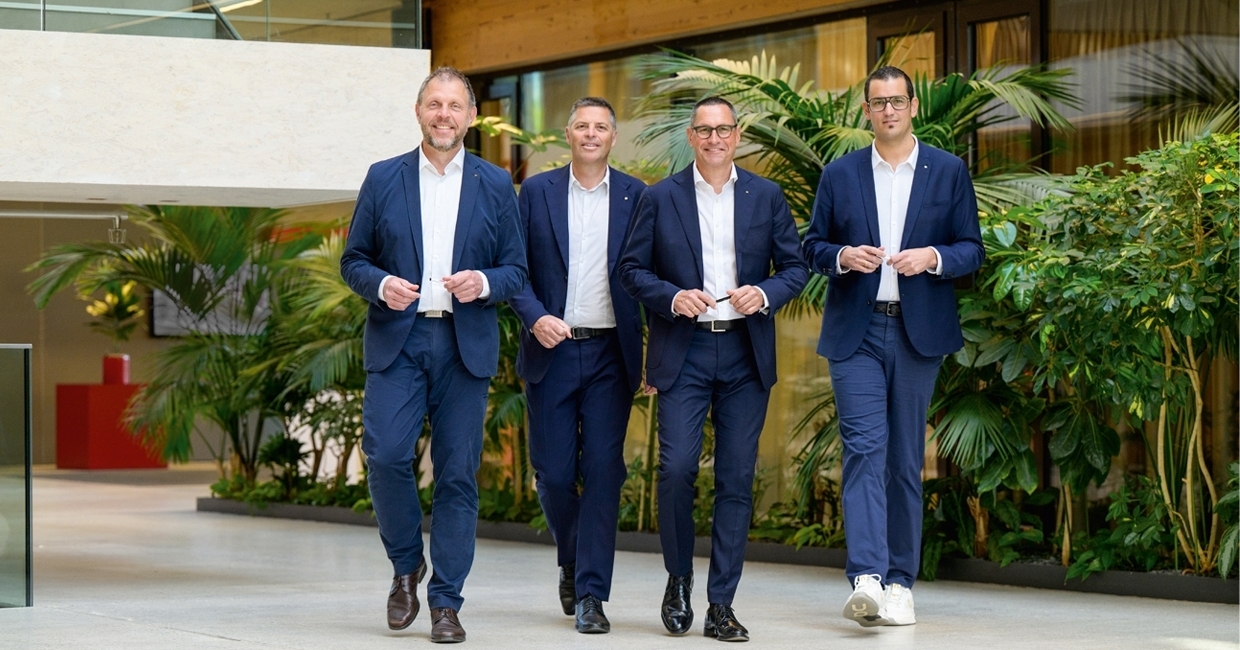
“The 2025/2026 financial year was shaped by widely differing market signals," said Thomas Leissing, Chief Financial Officer EGGER Group and Speaker of the Group Management, at the annual press conference at the company's headquarters in St. Johann in Tirol (AT). "After initial positive signs in some markets, hopes of overall economic stabilisation were significantly dampened by the geopolitical tensions of spring 2026.
"In an environment marked by uncertainty and a high degree of volatility, we were able to achieve stable performance. This is thanks to our reliable partnerships and the hard work and commitment of our approximately 12,000 employees worldwide. Our stability gives us the flexibility we need to consistently pursue long-term goals and strategic projects."
In the 2025/2026 financial year, EGGER generated group-wide revenue of EUR 4,264.7 million (+3.4% compared to the previous year). EBITDA amounted to EUR 541.8 million (+0.1% compared to the previous year) and the EBITDA margin was 12.7% (previous year: 13.1%). The equity ratio remains at a high level at 41.6%.
Developments in the various product categories
In the 2025/2026 financial year, the EGGER Group produced 10.9 million m³ of wood-based materials and timber (previous year: 10.8 million m³). The effects of the economic conditions were felt to varying degrees in the individual product categories. In the 2025/2026 financial year, the Decorative Products segment (products for furniture and interior design) generated unconsolidated revenue of EUR 3,794.9 million (+4.0% compared to the previous year).
Unconsolidated revenue in the Building Products segment (products for timber construction and flooring) amounted to EUR 714.0 million (+1.2% compared to the previous year). A key factor was the persistent weakness of the construction sector, which held back the development of building products and flooring in particular.
In terms of the markets, the situation proved most challenging in German-speaking countries, where there is significant pressure on margins and volumes, particularly amongst industrial customers.
A milestone was the launch of the EGGER Decorative Collection 26+. With the further development of the concept for this collection, the international harmonisation of the product range and a strong focus on customer requirements, the family business has played a key role in shaping developments in furniture and interior design.
Focus on the customer
Delivery performance is a key strategic priority for EGGER in the period up to 2028. Driving factors here are the growing requirements in regard to adherence to deadlines, transparency and flexibility in an increasingly complex market environment.
“Our customers already value us as a reliable partner. We want to build on that strength and get even better. In a market environment in which growth is not a given, it is all the more important that we are reliable, predictable and consistent in our actions across the entire customer relationship,” said Frank Bölling, Chief Supply Chain Officer EGGER Group. Despite the volatile market conditions, EGGER was able to further improve its delivery performance and set ambitious goals for the coming years.
Consistent investment in the future and in competitiveness
Even in economically challenging times, EGGER has continued with its long-term investment strategy. In the 2025/2026 financial year, the Group invested a total of EUR 450.1 million (previous year: EUR 435.0 million). The focus was on the further development of its industrial base, upgrading capacity, automation, future-oriented energy supply and the circular economy.
A major and significant project remains the expansion of the Markt Bibart plant (DE), which EGGER is investing more than EUR 200 million into over a three-year period. A key milestone was reached there in the financial year 2025/2026 with the commissioning of two short-cycle presses. In addition to raw particleboards, the plant now also produces laminated decorative boards. At the same time, the recycled wood processing facility has been further ramped up. The new high-bay warehouse will also begin operations by the end of the summer.
“Volatility has long since ceased to be just a short-term, exceptional phenomenon. Developments in the cost of wood and, in particular, the sharp increase in the cost of our chemical raw materials as a result of the Iran conflict show just how quickly conditions can change. This is why we are systematically strengthening the foundations of our business with high-performance production infrastructure, efficient processes, more wood from the circular economy and targeted investment in our plants,” says Hannes Mitterweissacher, Chief Technology Officer EGGER Group.
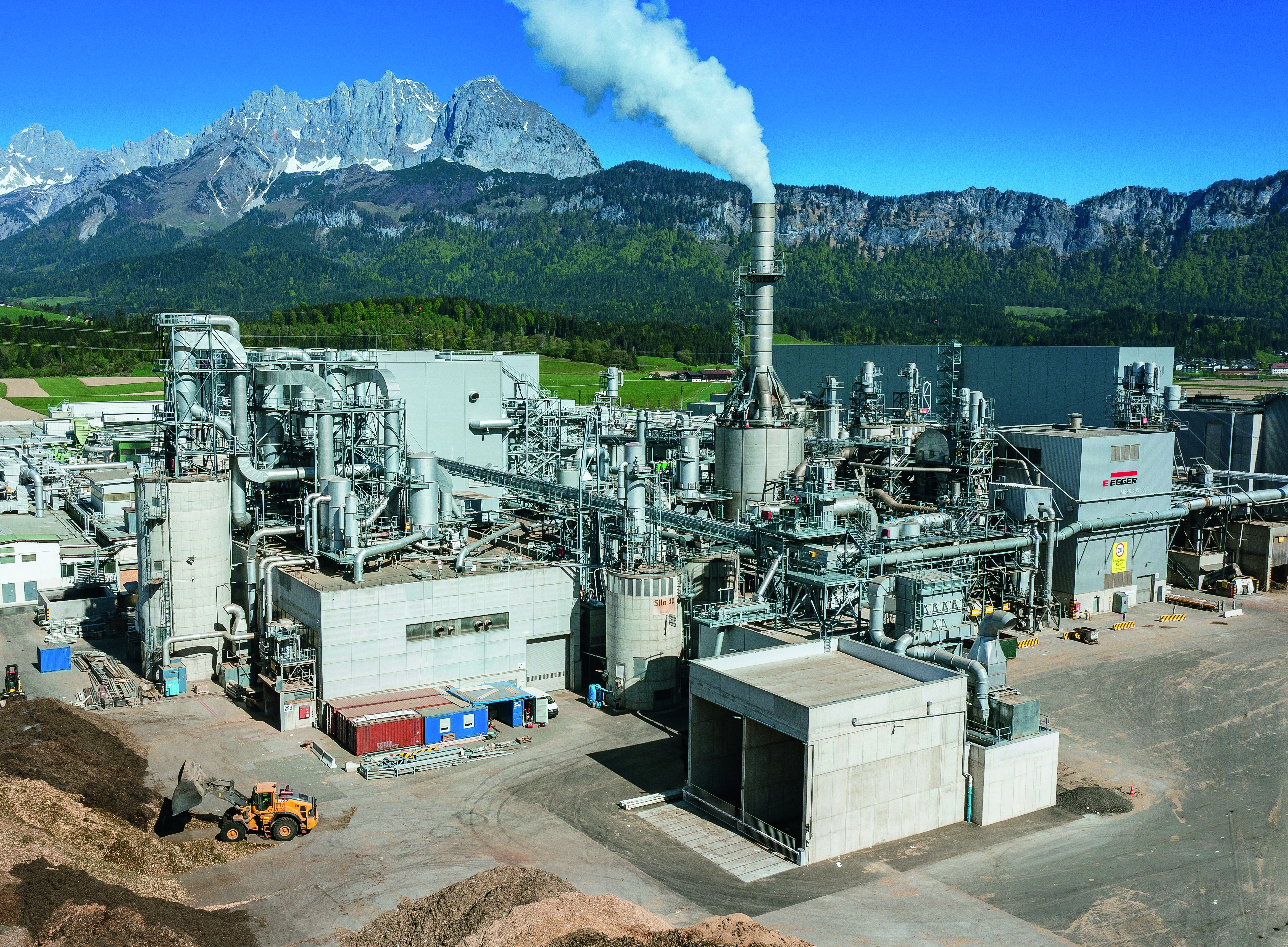
Another important milestone was the commissioning of the new power plant at the company's headquarters in St. Johann in Tirol (AT). The plant generated electricity for the first time in May 2026 and will in future make a significant contribution to the plant’s supply of renewable energy, while also supplying the regional district heating network.
Decarbonising the energy supply for the company’s own plants is an important lever in the implementation of its climate strategy, with the goal of reaching Net Zero by 2050. 71% of the EGGER Group’s energy consumption comes from renewable sources. Group-wide, 66% of the wood used in the wood-based materials is recycled material and by-products from the sawmill industry. For particleboard production, the figure achieved is 76% of the wood used. EGGER considers sustainability, investment and competitiveness to be inextricably linked.
Full details of the 2025/2026 financial year can be found in the Financial and Sustainability Report at to.egger.link/credit-relations.